RTGs for Miami port
13 February 2019
South Florida Container Terminal (SFCT) in Miami, Florida, USA, has ordered six zero-emission rubber-tired gantry cranes (RTGs) from cargo handling solutions specialist Kalmar.
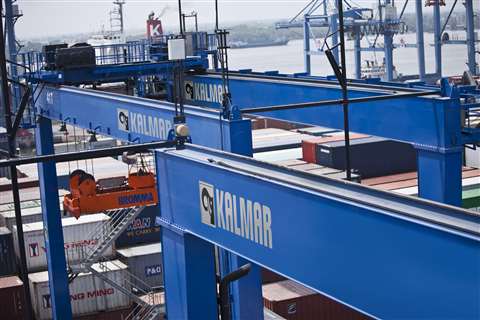
According to Kalmar, the cranes will be equipped with a busbar energy system and operator assist features including auto steering and container stack profiling.
The order was booked in Cargotec’s 2019 Q1 order intake with delivery scheduled to be completed in early 2020. Kalmar said this will be the first container terminal in the USA that has 100 % zero-emission RTG cranes and that these will also be the first RTG cranes installed at the Port of Miami.
The Kalmar Zero Emission RTGs will be delivered as part of an ongoing densification and terminal redevelopment project at SFCT.
Mark Baker, managing director of SFCT stated, “We are excited about the opportunity to increase our capacity through this terminal redevelopment project. We will not only offer better service to our customers, but we will do it eco-efficiently with all-electric RTGs. Kalmar has proven its ability to handle large terminal redevelopment projects on a global scale with successful RTG deliveries.”
Troy Thompson, vice president, sales, Kalmar Americas, added, “We are very pleased to be the first to bring zero emission yard cranes to Miami. We have worked extensively with the team at SFCT and are certain that our partnership will only strengthen further as we move through this major redevelopment project together.”

Mark Baker and Troy Thompson signing the agreement