Beyond the sticker price: Why TCO matters more than ever
Partner Content produced by KHL Content Studio
24 July 2026
The construction equipment market is as competitive as it’s ever been.
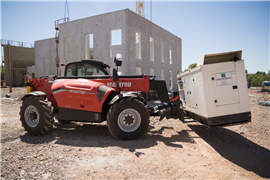 A construciton telehandler is able to quickly position a genset wherever it's required on site
Faced with economic uncertainty and tighter margins, contractors and rental companies are under pressure to control spending.
In that environment, and with aggressive manufacturer discounting, purchase price can easily become the deciding factor. But while a lower upfront cost may help satisfy short-term budget constraints, it doesn’t always result in lower costs, or greater profitability, over the working life of a machine.
Fleet owners are increasingly taking a longer view and judging equipment based on total cost of ownership (TCO) – a measure that incorporates everything from fuel consumption and maintenance requirements to uptime, utilization, operator productivity and resale value.
 Manitou’s Steve Kiskunas
According to experts at telehandler specialist Manitou, that shift reflects a growing understanding that the cheapest machine to buy is not always the cheapest machine to own.
“Over time, more and more people are starting to understand it’s not just the initial acquisition cost, but it’s the lifetime cost of the product that’s important for your business,” says Steve Kiskunas, Manitou’s North American TH Product Manager. “We see that increasing the focus of both fleet buyers and rental company owners, where they’re looking beyond just the initial cost and looking at the total cost of ownership.”
Looking beyond the purchase price
While the concept of total cost of ownership (TCO) is not new, the way it is being applied varies significantly across the market.
Increasingly, large rental organizations are using sophisticated systems to track machine costs, utilization and profitability throughout the equipment lifecycle.
Smaller businesses may still rely on more traditional methods, but the principle remains the same; understanding the true cost of an asset requires consideration of both fixed and variable expenses.
These costs typically include financing, depreciation and taxes, along with fuel, tyres, preventive maintenance and repairs.
Importantly, though, they also include less visible costs that can be difficult to quantify but have a major impact on business performance.
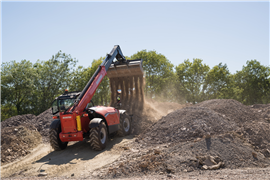 Earthmoving applications are no problem for a powerful construction telehandler
The hidden cost of downtime
Machine downtime is one of the biggest contributors to ownership costs, often extending well beyond the direct cost of repairs.
Lost rental revenue, delayed project schedules, the cost of parts shipments and reduced labor efficiency can quickly erode any savings achieved through a lower purchase price.
“Machine uptime is very important because it ties directly to utilization, and utilization is directly related to revenue,” says Kiskunas “If your machine uptime is higher, then your opportunity to put it on rent and generate revenue is much higher also.”
Downtime can also create operational disruption elsewhere in the business. With skilled labor both expensive and increasingly difficult to source, delays caused by unavailable equipment can have knock-on effects throughout a project schedule.
For fleet owners and rental companies, maximizing uptime is therefore not simply a maintenance objective – it is a revenue strategy.
Why service support matters
Maintaining uptime depends heavily on the quality of service support available throughout a machine’s life.
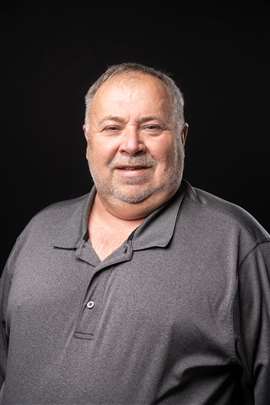 Manitou’s John Rau
Preventive maintenance, performed correctly and at the right intervals, is one of the most effective ways of reducing ownership costs. On the flipside, poor maintenance practices are likely to accelerate wear, leading to higher repair costs and potentially shorter equipment life.
“To me, serviceability is the number one thing that can be done for the lifetime cost of a machine,” says John Rau, Product Training Specialist at Manitou. “It means having professionals who understand what the right maintenance is at the right time. If maintenance is done incorrectly, you can actually increase future costs rather than reduce them.”
The same logic applies to parts availability and dealer support. When repairs are required, rapid access to parts and technical expertise can significantly reduce downtime and put machines back on site more quickly.
For rental businesses especially, every day a machine is unavailable represents lost earning potential.
Operator productivity is part of the equation
TCO discussions often focus on technical performance and maintenance costs, but operator productivity can be equally important.
A machine that is easier to operate and more comfortable to use can improve efficiency on site while reducing the risk of misuse and avoidable damage. This is becoming increasingly important as many contractors struggle to recruit and retain experienced operators.
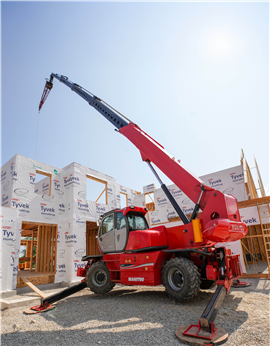 Fitted with a crane jib, lifting hook or winch, a construction telehandler’s outriggers allow it to undertake a number of applications generally reserved for a mobile crane
“Just giving operators 15 minutes of your time to explain everything and why they would use it goes a long way,” says Rau. “Once they become comfortable with the controls, they find they can do their jobs more efficiently because it takes less time to do them.”
Operator familiarity is also becoming more important as modern machines incorporate increasing levels of technology and functionality.
Simplified controls, intuitive interfaces and integrated operator aids can help less experienced users work safely and productively while reducing the likelihood of costly errors.
Data is changing fleet management
Telematics and connectivity technologies are also playing a significant role in reducing ownership costs.
While the industry often focuses on advanced analytics and predictive maintenance, some of the greatest benefits remain surprisingly straightforward. For example, simply knowing where a machine is and its current operating condition can improve fleet utilization and reduce service costs.
“Twenty years ago it was very common for a rental company to place a telehandler on rent and not see that machine again for 12 months,” says Justin Mergen, Solutions Deployment Manager at Manitou. “Today, telematics tells you exactly where the machine is, how many hours it’s worked and when scheduled maintenance is due. That makes supporting the machine much easier.”
The challenge now is less about collecting data and more about turning that data into actionable information.
 Manitou's Justin Mergen
As telematics systems evolve and artificial intelligence becomes more widely applied, equipment owners are expected to gain increasingly sophisticated tools for managing costs, utilization and maintenance planning.
Getting more from every machine
Another factor influencing ownership costs is machine versatility.
The ability to use multiple attachments allows telehandlers to perform a wider range of tasks, increasing utilisation and extending revenue-generating opportunities. Rather than deploying several specialist machines, contractors can often complete multiple jobs using a single platform equipped with the appropriate attachments.
“A telehandler with additional attachment options becomes a tool carrier capable of doing many more tasks,” says Kiskunas. “That opens up opportunities for greater utilization and longer rental periods.”
For contractors operating on congested jobsites, reducing the number of machines required can also lower transportation costs, simplify logistics and reduce maintenance requirements across the fleet.
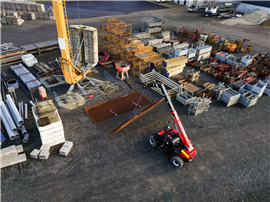 A construction telehandler’s versatility and maneuverability allow it to transport materials quickly and efficiently across a jobsite
Thinking long term
Ultimately, successful equipment investment decisions will depend on understanding value over the entire lifecycle of a machine.
The telehandler that costs less on day one may prove significantly more expensive if it suffers frequent downtime, consumes more fuel, requires higher maintenance spending or delivers lower productivity over time.
With buyers now becoming more sophisticated in their approach to asset management, total cost of ownership is moving from a secondary consideration to a primary decision-making tool.
For Kiskunas, the objective is straightforward – to ensure equipment consistently generates value throughout its life.
“I know some of our telescopic handlers are still working 20 years after they were manufactured,” he says. “A machine that is still earning income after 20 years has paid for itself several times over. At the end of the day, a telehandler should be generating cash for whoever owns it.”
--------
This article was produced by KHL Content Studio, in collaboration with experts from Manitou
--------
All images courtesy of Manitou
--------