Beyond torque: The challenge of power management for crushing equipment
Partner Content produced by KHL Content Studio
11 June 2026
In crushing applications, productivity is simply measured in tonnes per hour.
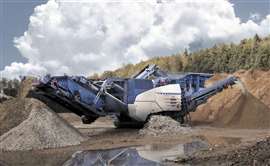 Torque management can be key for machines that occasionally have to withstand overload events
But that’s only part of the story. Whether processing hard rock, demolition waste or recycled aggregates, crushers operate in highly unpredictable conditions.
Material characteristics can change rapidly, feed consistency is rarely perfect and overload events are a constant operational risk.
Traditional drivetrains have historically relied on direct mechanical transmission from the engine or motor to the crusher. This is a generally robust method, but it can expose the entire system to sudden torque spikes during start-up, in the event of a blockage or if some uncrushable material enters the chamber.
The consequences of these scenarios are going to be accelerated wear, drivetrain fatigue, increased maintenance intervals and, potentially, some costly downtime.
“Crushing equipment is expected to absorb huge variations in load while maintaining continuous production,” says Gianluca Pagani, Technical and R&D Director with Transfluid, a global manufacturer specialising in advanced industrial and marine components.
 Gianluca Pagani, Technical and R&D Director with Transfluid
“The challenge,” he adds, “is that mechanical systems don’t naturally respond well to shock and the more aggressive the operating environment becomes, the more important controlled torque management becomes.”
From power transmission to power management
In the mobile crushing sector, there is growing recognition that power transmission systems should not be viewed as passive mechanical links, but should play an active role in controlling loads, stabilising performance and protecting critical components.
This can be seen in the adoption of variable fill hydrodynamic couplings, which transfer torque through a fluid medium rather than by direct mechanical contact.
By controlling how torque is transmitted during start-up and operation, these systems reduce mechanical shock and smooth out the interaction between the engine, motor and crusher.
This allows operators to achieve a controlled start-up under load. It also reduces stress on gearboxes and drivelines and helps improve system stability during operating conditions with fluctuating levels of power demand.
For diesel and electric-powered machines alike, technologies such as Transfluid’s KPT variable fill hydraulic couplings are designed around this principle.
“The system uses an externally driven oil feeding pump and electrically operated valve arrangement to regulate oil flow within the coupling, which allows for smooth engagement and controlled torque transfer,” says Samuele Aguggiaro, Transfluid’s R&D Mechanical Manager.
The result is not only softer start-up behaviour, but also the ability to isolate the prime mover from damaging load conditions.
According to Aguggiaro, “The industry has moved beyond simply asking whether a machine can start under load.
 Maximising uptime and lifespan are incredibly important on crushers, some of which can be immense - and hugely expensive
“The focus now is on how intelligently that load is managed throughout the operating cycle, because that directly affects component life, fuel consumption, energy efficiency and uptime.”
Reliability under pressure
For OEMs, drivetrain reliability has become increasingly important as machines grow more powerful – and so too do customer expectations around uptime.
Modern crushers often operate in remote or high-cost environments where any unplanned downtime has immediate operational and therefore financial consequences.
This is especially true in urban recycling applications, where contractors are often faced with tight schedules, variable feed material and pressure from local authorities to minimise disruption.
In these conditions, smoother torque delivery and built-in overload protection can offer significant operational advantages.
Hydrodynamic couplings can help with the absorption of vibration and reduce the transmission of shock loads through the driveline. These factors can go a long way to ensuring longer service life for connected components and subsequently a longer working life for the crusher.
Moreover, technology that can simplify servicing and reduce maintenance complexity in the field is always welcome. That includes the external mounting of components such as oil filters, feeding pumps and control valves.
The ability to disconnect the engine or motor from the load also supports unloaded warm-up and controlled acceleration, helping reduce stress during machine start-up sequences.
 Transfluid’s R&D Mechanical Manager, Samuele Aguggiaro
Smarter systems for modern operations
As crushing and screening equipment becomes more digitally connected, drivetrain systems are also evolving beyond straightforward mechanical functions.
Electronic management systems are increasingly being integrated into coupling technologies to provide monitoring, diagnostics and remote operational control.
Systems such as Transfluid’s MPCB management platform can monitor input and output speeds, track coupling parameters, provide alarm signals to central control rooms and support interlock logic implementation.
In diesel-driven applications, management systems can also measure torque and power, while helping operators optimise engagement and disengagement profiles.
For operators, this is part of a welcome trend in the industry towards predictive maintenance and operational transparency.
“In recycling and aggregates, operators are under pressure to maximise availability while controlling maintenance costs,” says Pagani. “Having better visibility into drivetrain behaviour allows problems to be identified earlier and helps avoid the kind of failures that create major production interruptions.”
 Crushers are regularly operating in remote environments in which unplanned downtime could mean a lengthy halt to operations
This level of monitoring is becoming particularly relevant as electrification expands across crushing equipment. Electric drivetrains can deliver high torque instantly, creating additional demands on transmission systems during acceleration and load changes.
As a result, controlled torque management is increasingly viewed as an important enabler of both diesel and electric machine performance.
A changing mindset in crushing and recycling
The broader shift taking place across crushing, screening and recycling is not simply about adding new components. It reflects a wider change in how machine performance is evaluated.
Historically, drivetrain systems were often considered secondary to throughput or installed power. Today, OEMs and end users are placing greater emphasis on total cost of ownership, equipment lifespan and operational resilience.
And that is changing the role of power transmission technologies within machine design.
Rather than acting as mechanical connectors, systems such as variable fill fluid couplings are now becoming part of a larger strategy to improve reliability, efficiency and machine protection.
For an industry operating under increasing pressure to improve productivity while reducing operational risk, the ability to actively manage torque, rather than simply transmit it, could prove to be one of the defining engineering priorities of the next generation of crushing equipment.
--------
This article was produced by KHL Content Studio, in collaboration with experts from Transfluid
--------
All images courtesy of Transfluid
--------