

Beyond uptime: The value of equipment support
Partner Content produced by KHL Content Studio
18 August 2026
In this post, Jessica Franck of John Deere Power Systems describes why aftermarket and customer support is evolving from reactive repairs to proactive collaboration – and how connected technologies are helping customers make better operational decisions.
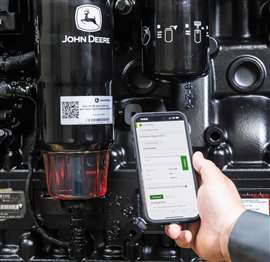 Simple engine registration can unlock the potential of John Deere’s Lifecycle Service Solution
For years, aftermarket and customer support has been judged by how quickly you can respond when something breaks.
Of course, that still matters, but I think today customers expect something more – a support team that helps them avoid downtime in the first place.
That shift reflects the realities equipment owners and operators face every day. Projects run on tight schedules, margins are under pressure, and there is very little room for unexpected downtime.
A single engine issue can mean reshuffling equipment, delaying work, waiting for diagnostics and ultimately impacting profitability.
It’s clear that keeping equipment running isn’t just about maintenance and repair – it’s about keeping our customers’ businesses on track.
From fixing failures to preventing them
The biggest change I’ve seen over the past few years is the move away from reactive service and towards proactive support.
Customers still need quality parts and skilled technicians, but they also expect support providers to help with maintenance planning, fleet monitoring and long-term equipment performance. Technology is making that possible, but customer expectations are really accelerating the change.
Connected solutions such as John Deere Connected Support™ are part of that evolution.
With a customer’s permission, operational data can be shared with their servicing dealer or engine distributor, allowing remote diagnostics, health monitoring and earlier identification of potential issues.
Rather than waiting for a failure to occur, dealers and distributors can often identify developing problems and begin planning a solution before the issue becomes critical.
It’s important to note that our support capabilities aren’t starting from scratch – they’re built on more than a decade of development and refinement across our agriculture and construction businesses.
That means many of the lessons have already been learned, allowing these capabilities to be introduced into power systems from a mature and tested foundation rather than an experimental one.
The best support starts before the customer calls
 Jessica Franck, Customer Support Manager, John Deere
A good example involves an OEM customer that had an engine retrofitted with JDLink™ hardware to take advantage of John Deere Customer Support capabilities.
When the engine experienced an issue, the dealer remotely diagnosed the fault within minutes, ordered the required part immediately and had the customer back in operation the following morning with a single site visit.
Instead of multiple trips and lengthy diagnostics, the entire process became faster, simpler and far less disruptive.
Experiences like that fundamentally change the relationship between customers and their dealer. The conversation changes completely – from the customer calling the dealer about a problem, to the dealer reaching out to the customer because they noticed something developing and would like to take a look before it becomes a bigger issue.
I’ve found that’s often the moment when customers begin to see the real value of proactive support. It isn’t just about fixing equipment faster. It’s about creating confidence that someone is actively helping protect their operation.
Technology only works if it’s backed by expertise
We’re making really good use of the latest technology, but that alone isn’t enough.
Customers understand well enough that data is available, but they still expect knowledgeable technicians, fair pricing, quality workmanship and service teams that understand both the engine and the application.
Also, once a fault has been remotely identified, it’s important that the right replacement part is available or that the repair is completed correctly the first time.
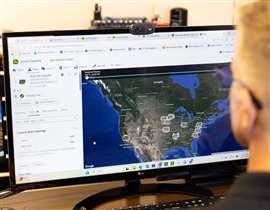 A technician monitors engines across the United States within John Deere’s Connect Support platform
Trust develops at different speeds. Some customers are ready to embrace connected services immediately, while others prefer to move more gradually.
That’s understandable. Confidence grows through the relationship customers have with their local dealer or engine distributor – and the understanding that they will always retain control of their operational data.
It’s often when they experience consistent service and tangible results that they feel comfortable exploring additional connected capabilities.
Looking beyond the next repair
We’re only at the beginning of this evolution.
Connected data is already helping customers plan maintenance, budget more accurately and understand more about how their equipment is being used.
Looking ahead, predictive analytics will increasingly help identify emerging issues, optimize maintenance schedules and support better fleet management decisions.
Ultimately, that’s where I see aftermarket and customer support heading – towards being a trusted, long-term operational advisor that can help customers get more value from every engine throughout its working life.
--------
All images courtesy of John Deere
--------