Bomag’s solution for a big small problem
15 April 2016
Compaction technology leader Bomag has used Bauma to announce an innovative solution for dust particles produced during road construction.
In collaboration with Dutch company Environmental Nano Solutions, the German firm has launched technology to tackle potentially harmful dust in large milling machines.
The system promises a reduction in fine particles of more than 80% – according to tests carried out by the institute for hazardous materials research (IGF), at the Ruhr University in Bochum.
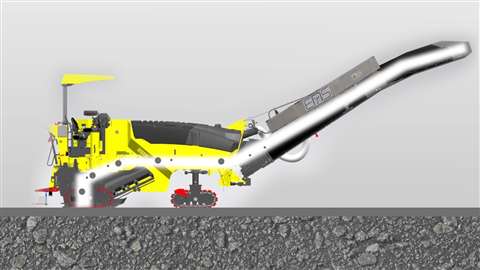
The equipment is mounted in a small housing on the machine’s conveyor belt, with an electrode placed nearby.
As the particles pass through the system’s electrical field, they become positively charged and are attracted to the electrode, where they clump together, forming flakes, which cannot be inhaled and are harmlessly ejected.
Jonathan Stringham, manager of milling at Bomag, said, "This new development considerably reduces the burden of road recycling – for construction plant operators as well as for residents.”
He added, “Bomag is the only manufacturer to offer this solution. It brings us a great deal closer to our goal of the sustainable construction site."
In future, Bomag says it will offer this particulate technology on all of its milling machines with working widths of more than one metre.