

Critical mass: How technology is transforming soil compaction
Partner Content produced by KHL Content Studio
29 June 2026
Soil compaction can often be overlooked but delivers a critical foundation to a successful project.
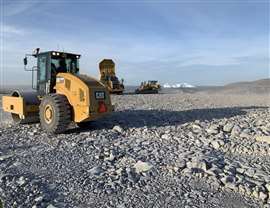 A Caterpillar soil compactor works on a project in Greenland
Earthmoving and road construction contractors are embracing new ways to deliver projects faster, more efficiently and with greater accountability.
As regulations evolve and experienced operators become harder to find, technology is helping teams maintain high standards and consistency across projects.
In this environment, effective soil compaction is becoming more important than ever.
Over-compaction wastes time, fuel and machine life, while poor compaction creates problems such as potholes, cracking, rutting, differential settlement and high maintenance costs.
Overlooked step
According to Caterpillar paving specialist Rolf af Klinteberg, soil compaction is the foundation of good road building. “It influences load capacity, settlement, drainage and long-term durability, essentially how well an asset performs over its life,” he says.
However, the importance of compaction is not always fully recognised during project planning.
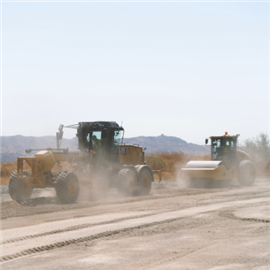 Working in extreme conditions, a Cat CS13 GC soil compactor follows a grader on a road constrction project
Time and cost pressures can make it difficult to devote attention to work that will ultimately be hidden from view. But this can lead to defects, which are invisible once buried.
“The result is a delivery paradox,” says af Klinteberg. “Compaction not done correctly can be costly to fix later, and one of the biggest hidden drivers of project risk, despite getting minimal attention.”
Hidden costs
The commercial consequences can be significant. Early identification of compaction issues can help contractors avoid costly excavation and reconstruction later in the project lifecycle.
Along with project delays, they create publicly visible defects that can cause reputational damage.
“Compaction failures rarely cause immediate collapse, but they steadily undermine performance and value,” says af Klinteberg.
“This shifts problems from construction into operations and maintenance, where costs, disputes and reputational damage escalate dramatically.”
Identifying inefficiencies
Most inefficiencies in compaction practices stem from how compaction is planned, executed and verified. A key issue is soil spot testing for density and moisture. This can be reactive and too localised. “Large areas can be missed or overlooked,” af Klinteberg says. “Testing becomes box-ticking rather than based on achieving uniform soil behaviour across the entire area.”
Other challenges include habit-based rolling, when cautious operators often over-compact, resulting in extra machine wear and fuel expenditure. Time pressures can also mean compaction is attempted in poor moisture conditions, which leads to low soil densities and wasted effort.
And above all, fragmented management can make it difficult to capture lessons learned and apply them consistently across projects. “Generally speaking, no single role oversees compaction quality end‑to‑end, so lessons are not captured and mistakes are repeated,” says af Klinteberg.
“The main inefficiency is misaligned effort,” he says. “Often, too much energy is applied without clear feedback on whether it’s working. Projects that reduce inefficiencies shift from compliance‑driven compaction to feedback‑driven, targeted
Onus on operators
 Cat Paving’s Rolf af Klinteberg
As experienced operators become harder to find, contractors are increasingly looking for tools that help deliver consistent compaction quality across crews and shifts.
According to af Klinteberg, “It takes years of in-the-field experience to gain the knowledge required to judge soil behaviour, moisture condition and effective compaction effort. Very experienced operators can rely on their real-time judgement as much as on fixed routines, pass counts and test results, to ensure the base is properly prepared for high-quality paving.
“An experienced operator,” he adds, “can read subtle signs in the soil based on machine response, surface movement or diminishing returns. They are also good judges of moisture conditions and can adapt to changing soil quality or type.”
For less experienced operators, technology can help reinforce best practices by providing clear feedback on the interaction between the compactor and the ground, supporting more consistent results.
af Klinteberg estimates that between 60 and 80% of compaction quality is currently driven by operator judgement, based on machine behaviour, soil response, visual cues and experience.
Only 20 to 40% is data driven, typically through spot tests for density and moisture. Measurement, he says, usually confirms decisions after the fact, rather than guiding them as they happen.
Data-driven compaction
OEMs like Caterpillar are responding to these challenges by adding more intelligence to compaction equipment – and strengthening the link between testing results and long-term asset performance.
At the same time, main contractors are seeking greater visibility into factors that influence long-term performance, particularly in areas such as settlement, rutting and trench stability.
This is driving demand for more traceability and better record-keeping on site. Enabling this are technologies such as intelligent compaction, GPS pass mapping, ground penetrating radar (GPR) and digital QA systems.
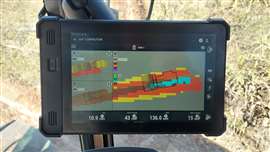 Operators have a real-time view of compaction progress with Caterpillar’s mapping technology
“The shift isn’t about replacing experience,” af Klinteberg insists, “it’s about using data to support, scale and de-risk experience, especially as skills become scarcer and long-term performance expectations rise.”
Technology in action
Mapping now goes hand in hand with measurement, turning isolated test results into a clear, area-wide picture of compaction quality. This reveals the weak zones and transitions that spot tests miss. It also reduces reliance on individual operator judgement by giving all workers a shared visual reference. Ultimately, it creates stronger quality assurance records and traceable evidence for commercial and claims protection.
“Basic measurements tell you if compaction passed at a specific location,” says af Klinteberg. “Mapping shows how well it was achieved everywhere, which turns data into actionable insights and makes for better decisions and lower long-term risk.”
Of course, mapping only works if compaction measurements are consistently taken in the correct locations. This is vital to ensuring the identification of weak zones, edges, trenches and transitions. It also enables meaningful comparisons across layers and shifts. Virtual reference station (VRS) technology can help, as it does not require land-based base stations to deliver high horizontal positioning accuracy.
This can be a huge efficiency boost, eliminating unnecessary passes as the operator can accurately tell when soil response plateaus. Operators can also precisely target weak zones, rather than recompacting entire areas.
If contractors catch problems early and can correct them, the need for more expensive downstream work is reduced. Operator productivity is also boosted, while fuel costs and equipment wear and tear are reduced.
“Precise compaction doesn’t mean doing more work,” says af Klinteberg, “it means doing smarter, targeted work. This cuts fuel, time, rework and long-term cost while improving quality and consistency.”
Real-time results
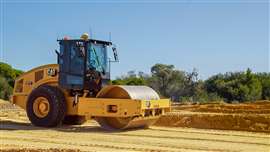 When operators receive real-time compaction data, problems are detected earlier and potentially costly rework can be avoided
With real-time feedback, operators can see how the soil is responding as they work, not after the fact. They gain insights by correlating that data with what they see and feel, which helps them detect weak zones early and adjust technique to changing soil conditions accordingly.
“This builds confidence for less experience operators and improves consistency across crews and shifts,” says af Klinteberg. “It also avoids over-compaction, which improves productivity and efficiency. It doesn’t replace operator judgement, it strengthens it and you get better decision-making.”
He believes trust in data is growing, primarily because it is now seen to support operators while reducing commercial risk. “Experience sets direction,” he says, “while data validates, refines and protects decisions.”
Growing trend
This is just the start of the journey; compaction technologies are evolving towards assisted automation and fully connected jobsites.
Machines increasingly guide operators, in real time, on key processes such as optimal passes, energy and speed. This improves consistency without fully replacing human judgement – the onus is on smarter machines, not driverless ones. Automation here is about self-adjusting settings, safety features, and pass optimisation.
The tech is also supporting better testing regimes. The industry is moving away from sparse spot testing and towards more accurate and direct measurement of density, temperature and moisture in real-time.
Furthermore, compaction data enables more connected workflows, via integration with design models, grading, paving, QA and QC systems, as well as scheduling. In turn, it enhances traceability and compliance as reports are increasingly generated automatically. Adding AI can also help identify patterns and predict risk, supporting supervisors rather than replacing them.
“The future is about empowering operators with better information and reducing uncertainty in decision-making,” says af Klinteberg. “Compaction technology is moving toward connected, data-driven systems that guide decisions, improve consistency and integrate seamlessly into smarter, more efficient jobsites.”
--------
This article was produced by KHL Content Studio, in collaboration with experts from Cat Paving
--------
All images courtesy of Cat Paving
--------