

How fuel-agnostic engines could help power construction’s future
Partner Content produced by KHL Content Studio
29 June 2026
By Jeremy Harsin, Director of Off-Highway Powertrain Engineering at Cummins
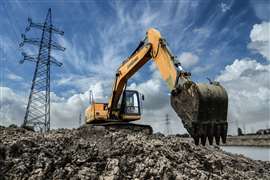 Some of the world’s heaviest construction equipment is powered by Cummins engines
Discussions about the future of construction power have often been framed as a contest between technologies. Diesel versus battery-electric. Hydrogen versus diesel. Internal combustion versus electrification.
In fact, the future is unlikely to belong to any single power solution.
Unlike on-highway markets, where operating conditions can be relatively predictable, construction equipment is deployed across an enormous variety of environments and duty cycles.
That diversity makes a one-size-fits-all transition strategy unrealistic.
Off-highway is the most complex and fragmented market we serve. Cummins alone serves hundreds of OEMs, many of which have highly specialised applications.
In this environment, flexibility is becoming one of the most important considerations in long-term powertrain planning. That’s why fuel-agnostic engine platforms are attracting increasing attention.
The Cummins HELM™ (High Efficiency Low Emissions, Multiple Fuels) platforms have been developed around the principle of fuel flexibility.
Rather than requiring different engine architectures for different fuels, the concept allows a common platform to support multiple fuel options while maintaining familiarity for OEMs and operators.
The objective is to help customers move at a pace that reflects their own operational realities, rather than forcing them towards a predetermined technology pathway.
Fuel flexibility and infrastructure
 Jeremy Harsin, senior director of off-highway powertrain engineering at Cummins
This flexible approach is important because the adoption of alternative fuels will be driven not only by technology, but also by the availability of infrastructure.
For example, while interest in hydrogen and other lower-carbon fuels is growing, there are significant challenges around fuel availability and refuelling.
Those challenges are often more pronounced in construction than in other sectors because machines regularly move between temporary and remote job sites.
For that reason, at Cummins, we expect adoption of some alternative fuels to emerge first in contained operating environments such as ports and industrial facilities, where fuelling infrastructure can be concentrated in a single location.
At the same time, advanced diesel technology and renewable drop-in fuels such as HVO are likely to remain important parts of the industry’s decarbonisation journey.
Advanced diesel is going to be hard to replace. Much of the infrastructure buildout previously mentioned will be reliant on advanced diesel equipment to complete.
Performance and economics
Performance is also still part of this conversation. Construction equipment is purchased to perform a job, and operators rightly expect the same levels of productivity, responsiveness and reliability, regardless of how a machine is powered.
Different fuels bring different characteristics, and those differences can create engineering trade-offs. Hydrogen, for example, can provide a viable pathway for some applications, but matching diesel performance in demanding transient-duty cycles is still a challenge.
Ultimately, end users care about outcomes. They want equipment that performs consistently, delivers uptime and supports profitable operations.
The economics are also important. While incentives can help accelerate adoption in some regions, long-term success will depend on technologies making sense from a total cost of ownership perspective.
That’s why I believe OEMs should already be thinking about future fuel requirements as they develop their next generation of machines.
Decisions around packaging, fuel storage and chassis design can be difficult and expensive to revisit later.
Hydrogen, for example, requires significantly greater fuel storage volume than diesel, creating important design considerations that need to be addressed early in the development process.
It’s also important to clarify what fuel agnostic means in practice; it doesn’t mean an individual machine can switch freely between fuels.
Rather, it means a common platform can be developed across multiple fuel variants, giving OEMs and fleet owners greater flexibility as market conditions and regulations evolve.
In that sense, fuel-agnostic platforms provide options in an industry where a piece of equipment can often outlast a regulatory cycle and where regional market requirements can evolve in different ways.
Despite the attention surrounding alternative fuels and electrification, I don’t expect the construction industry’s overall power mix to change dramatically in the immediate future.
There will undoubtedly be areas where adoption accelerates more quickly than others, but for most of the market the transition is likely to be gradual rather than sudden.
Also, different applications, operating environments and customer requirements will require different solutions.
This is why the flexibility of fuel-agnostic platforms could be such a valuable asset to the construction industry.
--------
All images courtesy of Cummins
--------