How rental businesses can modernise for growth
Partner Content produced by KHL Content Studio
20 May 2026
The rental industry is under pressure to modernise, but not because technology has suddenly become fashionable.
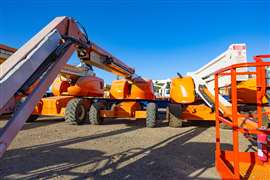 Minimising the under-utilisation of equipment is a constant issue for rental businesses. Image: Adobe Stock
Rather, it’s because, as rates are driven down and customer expectations rise, the old ways of working are starting to show their limits.
Modernisation today is not just about efficiency, it’s about protecting margins, improving service and creating the foundations for growth.
Graham Dobbs, managing director of the rental offerings at Klipboard – whose solutions include the former InspHire-branded rental software – believes the rental market has always shown resilience in the face of new pressures.
“It seems the rental industry and the construction industry are having to rise to these challenges on a regular basis,” he says, “but agile and adaptable businesses can do that.”
Today’s challenge, though, is a little different: It’s less about adapting to one new rule or requirement and more about responding to a whole series of forces at once, including labour pressures, customer expectations, data security, compliance and the need to make better decisions faster.
Why the pressure to modernise is growing
For some businesses, the journey is starting from a very traditional base.
Companies that begin with paper-based methods, spreadsheets or a mix of software and manual workarounds are feeling the most pressure.
Dobbs is clear that fully manual operations tend not to last long, but hybrid ways of working remain common.
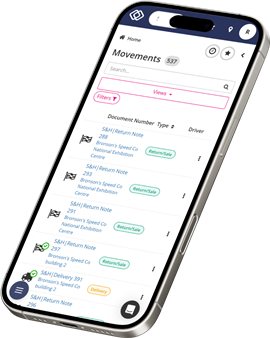 Klipboard’s OnRent Go is a cloud-based rental management solution with embedded AI
“A lot of businesses still use hybrid methods,” he says. “They will use some software, but they’ll also maintain a lot of their operations on spreadsheets.”
That is becoming harder to sustain, especially as the industry faces the challenge of an ageing workforce while struggling to attract the next generation into office and rental-desk roles.
“I’m not seeing as many younger people coming through on the business side,” says Dobbs, “and those who do enter the sector arrive with very different expectations.
“They’re looking to work with the latest technologies, not traditional methods. They talk about AI and want to know what’s coming next.”
The result is a growing realisation that the sector needs a step-change in technology.
So, is the rental sector approaching a tipping point? Dobbs believes it is getting closer, and not simply because of internal pressures.
“Customer expectations are raising,” he says. “They want 24/7 access. They want to know what they’ve got on rent at the moment. Basically, they want the Amazon experience.”
That phrase neatly captures how far expectations have moved. Customers increasingly want transparency, immediacy and self-service options.
They want to place orders online at any time, check availability, see what is on hire and get proactive communication about timings and extensions.
They might also want integrated systems that allow them to take payments, as well as managing deposits, extensions and damage charges.
In fact, says Dobbs, embedding payments into the system has the capacity to turn these operations from a source of friction into a genuine growth engine.
 Klipboard’s Graham Dobbs
“Rental businesses are looking for the next level of service – and transparency,” he says.
The easy wins are often the most valuable
Asked where the easy wins are, Dobbs doesn’t start with grand transformation projects, he starts with digitisation.
“Digitisation of deliveries, collections, breakdowns, workshop jobs – these absolutely should be where people are looking to gain that benefit.”
From there, he says, the benefits multiply quickly: “Automating repeatable tasks, removing unnecessary filing and rekeying, capturing proof of delivery instantly, emailing invoices, pushing invoice data directly into customer systems and ultimately reducing the administrative burden on staff.”
The point, he adds, is not to replace people, but to remove friction. The aim is “getting technology to do repetitive tasks for people so that humans can then spend more time with their customers and working on business growth.”
Of course, if using software is hard to get to grips with, businesses will struggle to onboard new staff and will never get full value from the system.
“It’s important that the software is easy to use straight off the bat,” says Dobbs, adding, “Simplicity is not a nice-to-have, it’s a strategic advantage. It shortens onboarding, makes things consistent and easier for both experienced operators and newer recruits to work confidently with.”
Why cloud-native matters
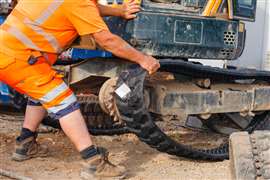 It is key for rental businesses to closely monitor the servicing and maintenance of equipment. Image: Adobe Stock
This is where the benefits of native-cloud software become more specific.
Dobbs distinguishes between genuine cloud-native platforms and older systems that have simply been repackaged with a web front end.
A true native-cloud application, he says, means accessibility and resilience.
“You can use it on your phone, tablet, PC or laptop,” he says. “It can be used from anywhere and everything is absolutely up to date.”
That matters from an operational perspective because, put simply, live data improves decision-making. Teams can see what equipment is available, what’s in repair, when it will return to service and what needs to be prioritised in the workshop.
From a business growth perspective, it matters because cloud systems are easier to scale, easier to roll out to new locations and better suited to integration with finance, logistics and telematics tools.
And it matters from a risk perspective, because cybersecurity and compliance are moving higher up the agenda.
“Knowing that your data and your customers’ data is safe is absolutely critical,” says Dobbs, noting that, for businesses serving larger contractors or regulated sectors, security credentials can mean making it onto a tender list – or not.
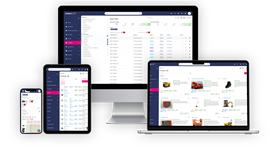 Klipboard’s OnRent Go software can be accessed on any device from any location and at any time
He also argues that smaller rental firms can’t realistically match the protection offered by cloud infrastructure providers. “That level of security does not come cheap, so having it built in with native cloud applications brings that level of security within reach for all,” he says.
AI should help people act faster and smarter
Artificial intelligence is the next part of the story. For Dobbs, the immediate practical value for rental businesses is in guidance, automation and faster access to insight.
He stresses that AI can help users create quotes more quickly, suggest the right accessories, surface exceptions and make it easier for less experienced staff to operate at a level similar to that of a much more experienced team member.
Dobbs says, “A typical parental saying we’ve all heard is ‘If I knew what I know now when I was your age...’ AI now makes that possible, because, with AI as your assistant, you have access to a huge repository of information and knowledge.”
Equally importantly, it can help businesses interrogate their data more effectively: which assets have not moved for three months, which machines perform better over time, where margins are strongest and how utilisation can be improved across the fleet.
This technology can also be employed to prevent the overuse of specific pieces of equipment, extend asset life, reduce unnecessary cross-hire and optimise deployment.
Finally, Dobbs highlights the potential of AI to support more sustainable operations by reducing idle time and unnecessary transport movements.
But he is emphatic that AI should only support people, not replace them. “Humans will make the final decision. AI is the assistant, helping teams serve customers better, act faster and make more informed choices.”
The businesses that move now will be the winners
Looking ahead, Dobbs believes the winners will be the businesses that combine customer focus and smart use of data. “The ones likely to thrive will have the ability to adapt and be agile. They’ll have to be more digitised, more automated, more transparent and more secure.”
It seems likely that businesses making the technological leap will position themselves to offer customers better service, ensure better utilisation of assets and generally make better decisions.
In a market under pressure, that may prove to be the biggest competitive advantage of all.
--------
This article was produced by KHL Content Studio, in collaboration with experts from Klipboard
--------
Klipboard recently published research into the performance of rental operations. Click on the links below to register and download the full reports:
Construction Plant & Tool report
For further information on this topic or on other Klipboard services, visit www.klipboard.com
--------
All uncredited images are courtesy of Klipboard
--------