How smart technology is changing the crawler dozer workplace
Partner Content produced by KHL Content Studio
19 November 2026
Construction equipment is becoming increasingly automated, but that does not necessarily mean the operator is becoming less important. On crawler dozers, technology is instead changing where the operator’s expertise is applied.
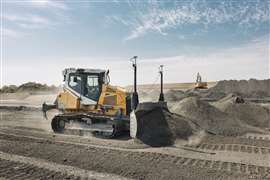 GNSS machine control helps operators translate digital site models into accurate grading, reducing repetitive blade adjustments and rework
Dozer operators must combine productivity with precision, often while working long shifts in difficult conditions. At the same time, contractors are under pressure to improve accuracy, minimise rework and make the best use of experienced personnel.
These demands are influencing the development of modern crawler dozers. Ergonomic cab design, automated blade functions, digital terrain models and remote operation can all reduce repetitive demands while allowing operators to concentrate on site conditions, machine positioning and the wider progress of the job.
The equipment manufacturer Liebherr is focusing heavily on the interaction between ergonomic cab design, integrated assistance systems and the machine’s high performance and productivity to provide operators with optimal support and reduce their workload in everyday operations.
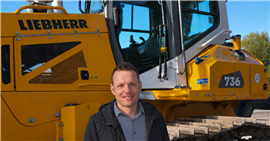 Benjamin Rappold, Head of Electronic & Software Development with Liebherr
“The intention of our operator assistance systems is not to take responsibility away from the operator,” says Benjamin Rappold, Head of Electronic & Software Development with Liebherr. “They help massively to reduce repetitive demands and enable operators to increase productivity, while concentrating on the parts of the job that require experience and judgment.”
Anyone who spends eight hours or more a day moving large volumes of material, grading challenging terrain, and maintaining a high level of concentration requires a working environment that provides support and minimizes fatigue.
A spacious, sound-insulated cab and ergonomically arranged controls help reduce operator strain.
Visibility is equally important: the architecture of modern Liebherr crawler dozers is designed to provide operators with an unobstructed view of the blade, rear ripper, and the entire working area. This not only enhances safety on the jobsite but also gives operators the confidence they need to utilize the machine’s full performance potential with ease and comfort.
Operator comfort can also affect performance. Reducing noise, physical strain and awkward movements can help an operator remain focused during long or repetitive shifts.
 Markus Heinz, Sales & Product Manager with Liebherr
“Comfort and productivity are closely connected,” says Liebherr Sales & Product Manager Markus Heinz. “An operator with good visibility, intuitive controls and a well-designed workplace is better placed to work accurately and consistently throughout the day.”
Supporting blade control
The precise execution of grading operations requires a consistently high level of skill and accuracy. Modern assistance systems support operators in maintaining this high standard throughout the working day.
By taking over certain control tasks, technology transforms the operator’s role from that of a machine driver into that of a site shaper who can focus on the efficient and safe progress of the project.
Liebherr’s Definition Grade and Free Grade assistance systems support operators in blade control. Definition Grade automatically maintains the blade at a pre-defined target angle, while Free Grade actively stabilizes the blade during fine grading operations. This enables precise surfaces, ramps, and slopes to be created more quickly and with consistently high quality, significantly reducing operator workload.
For the implementation of complex terrain profiles, Liebherr crawler dozers are fully compatible with 3D machine control systems from leading manufacturers.
The blade is automatically positioned according to the specifications of the digital site model. The operator supervises the automated process, manages machine performance, and can focus entirely on the accurate execution of the terrain design.
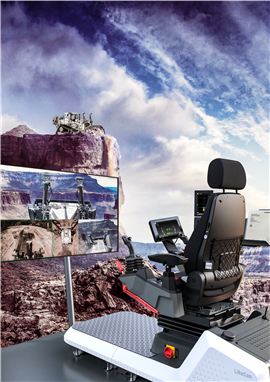 Liebherr’s LiReCon teleoperation system allows operators to control dozers from outside the immediate hazard zone
These systems do not remove the need for operator skill or appropriate training. Ground conditions can change quickly, and the operator remains responsible for positioning the machine, monitoring the work area and deciding when intervention is necessary.
“We developed Free and Definition Grade in close interaction with experienced dozer drivers,” says Rappold. “One of our main goals was to achieve an optimum balance between performance and usability of the assistance systems for strong user acceptance and easy operation.”
Adapting models from the cab
Another key component of efficient jobsite operations is Liebherr’s Free Modelling assistance system. It enables operators to create and modify simple 3D site models directly via the in-cab display.
If site conditions change unexpectedly due to weather influences or project modifications, operators can independently update the model and continue working immediately.
This significantly reduces the need for time-consuming coordination with external surveying teams.
Through the use of GNSS machine control, intelligent sensors, and real-time data visualization, operators always have access to the latest project information.
Site models can be adjusted flexibly, accelerating workflows and minimizing potential sources of error. This increased flexibility ensures smoother jobsite operations and helps avoid costly rework.
The ability to make changes from the cab can be particularly useful for relatively straightforward tasks, such as forming temporary ramps or adapting working areas as a project progresses.
More complex or design-critical alterations may still require input from surveyors, engineers or other members of the project team.
Heinz says, “For suitable tasks, Free Modelling gives the operator a ready-to-work solution with no dependencies on the jobsite.”
As with other machine-control functions, effective implementation requires accurate models, suitable training and a clear understanding of who is responsible for approving changes.
Operating outside the hazard zone
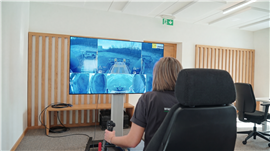 Camera views and machine information help operators stay connected to the dozer from the LiReCon remote-control station
When working on steep slopes, in contaminated areas, or in hazardous environments, operator safety is the highest priority.
An option here is Liebherr’s LiReCon (Liebherr Remote Control) teleoperation system, which effectively moves the operator’s workplace out of the immediate danger zone.
The operator controls the crawler dozer precisely from a safe remote-control station. Multiple high-resolution cameras, microphones, and sensors transmit the surrounding environment in real time, providing a comprehensive view of the work area.
For operators, this means maximum safety combined with comfortable working conditions.
At the same time, jobsite processes can be optimized. Shift changes, for example, can be carried out directly at the control station without requiring long walks to the machine.
LiReCon therefore helps create a more attractive workplace for operators while ensuring efficient machine utilization and availability.
Remote operation does not eliminate the need for careful risk assessment and site planning.
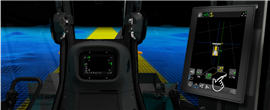 Liebherr’s Free Modelling assistance system allows operators to create and modify simple 3D site models on the in-cab display
Reliable communications, appropriate camera coverage and suitably trained operators remain essential. Its principal contribution is the physical separation it creates between the operator and the immediate working environment.
According to Rappold, “Lirecon, in conjunction with assistance systems, changes where the operator works while not losing the connection to the machine and allows efficient working from a distance.
“The operator remains in control and continues to make the operational decisions without being physically located within the hazard zone.”
Technology and human expertise
The commercial case for these technologies will vary according to the contractor and application. The type of work, the experience of the operator, the availability of accurate digital information and the potential cost of rework will all influence their value.
Technology alone cannot guarantee better jobsite performance. Assistance systems need to be introduced alongside suitable training, reliable project data and working procedures that define when automation can be used and when human intervention is required.
“Technology provide greater consistency, while the machine, operator and project information all have to work together,” says Heinz. “Together, these elements build a homogeneous system.
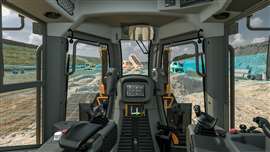 Digital terrain models and integrated assistance systems support precise grading, while cab visibility helps operators monitor the wider work area
Although modern crawler dozers now offer an unprecedented level of technological support, the person behind the controls remains the decisive success factor on any construction site.
Automated blade functions can manage repetitive adjustments, digital models can connect design more closely with execution, and remote operation can separate people from hazardous environments.
However, the operator must still interpret changing conditions and decide how the machine should be used.
The direction of development is therefore not towards removing the operator, but towards helping them apply their expertise more effectively.
For contractors, the potential result is a combination of human judgement and machine-supported consistency that can improve accuracy, reduce operator strain and support safer, more productive earthmoving operations.
--------
This article was produced by Liebherr, in collaboration with KHL Content Studio
--------
All images courtesy of Liebherr
--------