Mammoet in double mine transportation
17 March 2014

Transport and heavy lift provider Mammoet Australia, has transported two lots of mining equipment for two separate companies during a short time frame in Australia.
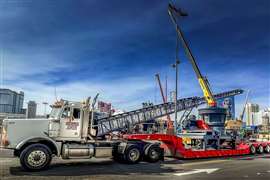
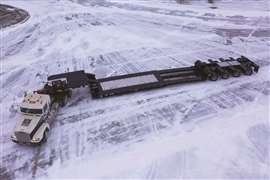
For the first project, Mammoet transported a Liebherr R996 mining excavator 250 kilometres from a mine in Christmas Creek to Solomon, Australia. The client, Fortescue Metals Group (FMG), requested that the machine was transported in one piece and that it arrived on site before a ban on heavy hauling was put in place during the run up to Christmas.
To complete the task, Mammoet used a double 24 Goldhofer with 6 block trucks. Bad weather, however, meant that the task was temporarily put on hold. During this time Mammoet was asked to carry out a transportation for BHP Billiton Iron Ore. The task was to move a Liebherr R996B mining excavator 35 km.
Mammoet moved 36 axle lines, including self-propelled modular transporter (SPMT) and auxiliary equipment, 500 km to Jimblebar, where Billiton Liebherr was located. From here the Liebherr R996B was transported to Mount Whaleback mine 35 km away.
In addition to a short time frame, challenges included two national-highway crossings and a high-voltage power line. The machine was moved at night.
After it was delivered to the Mount Whaleback mine, Mammoet returned to FMG’s Solomon mine, where it loaded the R996 onto a double 18 SPMT. The change in equipment was due to sloping road conditions, a company spokesperson said.
Both jobs were carried out and completed within the designated time frame and were delivered on time.