Modapower targets the North American power gap
Partner Content produced by KHL Content Studio
15 September 2026
Demand for dependable power is growing across North America, but requirements are diverse.
For example, a data center seeking high-capacity standby generation has little in common with a contractor moving a rental unit between jobsites.
Then again, oil and gas operations may face extreme temperatures, while agricultural users depend on power for remote irrigation.
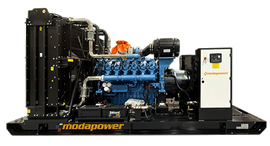 Modapower’s current UL-certified stationary range extends from 8 kW to 2,000 kW
Grid instability, severe weather and pressure on equipment supply have made availability increasingly important. At the same time, a generator designed for another region can’t simply be shipped into the US or Canada without changes to its engineering, certification and support.
These are the conditions Modapower is addressing as the manufacturer expands in North America. Its power-generation experience dates to the 1970s, when it operated as a licensed manufacturer for Perkins and Volvo engines. By the mid-1980s, it was designing and manufacturing its own generator sets.
That heritage from its Peruvian base is a starting point, but experience alone does not guarantee success in a new market. The test is whether it can be translated into locally compliant, readily available equipment.
A widening power shortfall
Modapower sees a shortage of backup power capacity as a significant challenge in North America. Hyperscale data centers are adding particularly strong demand, but availability is an issue well beyond that sector.
Extended lead times can leave projects waiting months for essential equipment. Specialist applications, from refrigerated transport to high-salt coastal environments, may be poorly served by standard configurations, adding time and cost.
Operating demands also differ. Oil and gas customers can require extreme-temperature specifications; construction users need rugged, portable units; and farms may need power at remote sites. Each can face the same supply-chain constraints.
If power equipment does not arrive on schedule, construction programs can stop, businesses can lose revenue and operators may face safety risks. A delayed standby generator can also leave a facility exposed during storms or grid interruptions.
More than a change of voltage
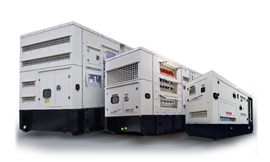 Modapower's stationary units incorporate Tier 4 Final engines for the North American market
Entering North America involves much more than adapting a familiar generator to a different electrical specification. Manufacturers need to meet stringent emissions and safety requirements, including relevant US Environmental Protection Agency standards and UL certification.
According to Waldemar Schroeder, President of Modapower’s Energy Division, enclosures must be engineered around Tier 4 Final engines without undermining emissions performance. Customers also expect a high standard of finish and evidence that the complete package was designed for the market.
“Introducing a generator developed for other markets into North America is not a straightforward process,” he says. “Achieving stringent EPA emissions compliance and securing UL certification for safety are non-negotiable requirements that demand dedicated engineering effort.”
Climate, fuel autonomy, transportability and purchasing expectations also shape the product. Local distribution and after-sales support are needed to maintain it throughout its working life.
Modapower began adapting its portfolio in earnest when it secured UL certification for its EPA-compliant generator line in 2020. It incorporated Tier 4 Final engines for stationary units and subsequently developed its rental range through direct customer feedback.
The company quickly gained much-needed local knowledge, but Schroeder acknowledges that customer feedback was crucial in helping its engineers refine products around practical requirements.
Covering stationary and mobile demand
Modapower’s current UL-certified stationary range extends from 8 kW to 2,000 kW. It says it plans to increase the upper limit to 3,300 kW before the end of the year and is considering systems up to 4,200 kW in the future.
Its mobile and rental products currently provide prime-power ratings from 8 kW to 550 kW, using Tier 4 Final engines. Potential applications include construction sites, agricultural irrigation, emergency standby for critical infrastructure, temporary event power and oil and gas field operations.
 Waldemar Schroeder, President of Modapower’s Energy Division
Range breadth matters, but so does matching a unit to its environment. Even familiar applications can bring particular footprint, distribution, voltage or enclosure challenges.
Schroeder says control of manufacturing helps Modapower respond efficiently. It designs and manufactures the skid, fuel tank, enclosure and wiring harness, rather than relying on a largely fixed package.
“While fully custom-tailored projects are not the everyday standard, our ownership of design and manufacturing gives us the flexibility to address specific client requests efficiently,” he says.
Collaboration with engine and component suppliers is also central to signing off specialist applications. Designing, manufacturing and testing an entirely new unit typically takes five to six months. Once a design is established, control of manufacturing and stocked components can support faster production.
Confronting the power gap
For a small North American data centre, Modapower delivered the first of two 1.1 MW backup units with their distribution panels facing each other to meet an unusual spatial requirement. In California, it designed a compact 100 kW Tier 4 Final stationary unit around a strict footprint.
For a Canadian partner, the company supplied two 600 kW, 600 V generators with integrated UL 142-certified fuel tanks. Its rental units can also be specified with or without distribution equipment such as ground-fault circuit interrupters, voltage selectors and camlocks, depending on the needs of the fleet.
Local adaptation is sometimes driven by a single persistent operating problem. In coastal, marine and highly humid environments, that problem is often corrosion.
Conventional steel enclosures can deteriorate prematurely when repeatedly exposed to salt and moisture. Aluminum provides strong corrosion resistance, but can increase enclosure cost by more than 30%.
Modapower has developed a fiberglass enclosure intended to provide aluminum-like corrosion resistance and low weight at a price closer to steel. According to Schroeder, the material also reduces noise and can simplify handling and installation.
Enclosure material is therefore not simply cosmetic – it can affect service life, maintenance, sound levels, transport and installation costs.
Availability as an engineering issue
Recently, product availability has become a point of competition in its own right. Modapower quotes delivery times of three to six weeks for many units, supported by an inventory of more than US$20 million in engines and alternators rated up to 700 kW.
Holding inventory reduces dependence on components ordered after a sale, but speed still has to sit alongside certification, testing and quality control.
Schroeder points to the company’s ISO 9001 certification, which it achieved in 2018 and renewed in 2025. He also cites having complete control of the manufacturing chain as a significant advantage.
“Because we manufacture the generator from scratch, we fully own the quality-management process,” he says. “That helps ensure that customization and speed don’t compromise the integrity of the unit.”
The relevant measure is whether a correctly specified and certified package can be supplied when needed. Distributors also need realistic information about stock, production capacity and engineering requirements.
Support beyond the sale
As Modapower builds its North American distributor network, its long-term prospects will depend on more than the generators themselves.
Distributors and end users need access to parts, technical knowledge and timely help when equipment develops a fault in the field.
The company’s strongest distributor relationships are with organizations that can diagnose and resolve field issues. Modapower supports them through technical training, remote diagnostics and access to genuine parts.
For buyers assessing a relatively new name in the market, these capabilities are likely to matter as much as nameplate output or purchase price.
The practical test of a power-generation partner is whether it combines compliant equipment and application engineering with a dependable supply chain and service support that lasts beyond commissioning.
Modapower’s expansion shows both the opportunity and the challenge facing manufacturers entering North America. Demand is strong, but it is fragmented by regulation, climate and application.
Global experience can provide the engineering foundation, but Schroeder insists that those looking to gain lasting traction must have the products, the availability and the support to be genuinely local.
--------
This article was produced by KHL Content Studio, in collaboration with experts from Modapower
--------
All images courtesy of Modapower
--------