The uptime problem that’s hiding in your equipment’s fluid
Partner Content produced by KHL Content Studio
22 July 2026
For most contractors and fleet managers, downtime means a machine stranded on site, a failed hydraulic pump, or an engine that suddenly refuses to start in the middle of a critical shift.
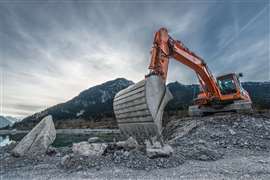 Dust, moisture, temperature swings and inconsistent fuel handling can all lead to contamination
But increasingly, some of the most costly downtime issues are not caused by catastrophic failure, but begin quietly, with contamination moving unnoticed through fuel systems, hydraulic circuits and bulk storage tanks every single day.
As construction equipment becomes more sophisticated, these systems leave almost no room for dirty fuel or contaminated fluid.
High-pressure fuel injection systems, tighter hydraulic tolerances and more demanding emissions technologies have made modern machines significantly less forgiving than their predecessors.
In many cases, contaminants invisible to the naked eye can trigger wear that eventually results in expensive repairs, unplanned stoppages, decreased equipment performance and shortened component life
“A lot of people still see filtration as just another line item on a parts order,” says Matthew Gram, Sales Engineer Manager, Hydraulics & Bulk Filtration with Donaldson. “But we’re past that. When you’re running half-a-million-dollar machines, it’s a risk management conversation.”
 Matthew Gram, Sales Engineer Manager, Hydraulics & Bulk Filtration with Donaldson
That shift is becoming increasingly important at a time when uptime pressures have never been greater.
Fuel storage and handling practices, machine servicing procedures, hydraulic cleanliness and operator behavior can all influence the long-term reliability of equipment.
The contamination problem operators often don’t see
On many jobsites, machines are fueled from bulk storage tanks operating in harsh environments. Dust, moisture, temperature swings and inconsistent fuel handling practices all create opportunities for contamination to enter the system.
Water intrusion, particulate contamination and even microbial growth inside tanks can then be transferred directly into equipment during refueling.
The challenge is that modern engines are extremely sensitive to those contaminants. High-pressure common rail systems can operate at pressures up to 40,000 psi, at which even microscopic particles can contribute to injector wear and premature component failure.
Unlike a straightforward mechanical issue, contamination damage builds slowly.
“Often times a mechanical failure event that happened from contamination, had a pattern of warning signs that were not understood or ignored,” says Donaldson Product Training Manager Gabriel Blevins.
“Rapid filter plugging, negative lab results from oil sampling, improper maintenance practices, damaged or missing components like breathers on the hydraulic reservoir, etc. These are all warning signs that the equipment is heading towards a mechanical failure, so it’s critical to listen to and understand the warnings.
“You rarely get a single event that immediately points to contamination. What you tend to see instead is a pattern – repeated filter plugging, declining efficiency, injector wear. Eventually the costs start compounding.”
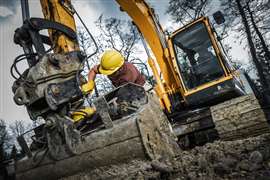 Contamination-management strategies can be relatively straightforward compared with the cost of repairing modern fuel systems or hydraulic components.
Hydraulic systems can face similar issues.
Contaminated reservoirs and poor fluid cleanliness can cause increased wear across pumps, valves, motors and seals. In demanding construction and aggregate environments, airborne dust alone can create significant long-term reliability issues if systems are not properly protected.
Why modern equipment raises the stakes
Contamination is nothing new. What is, however, is the value and complexity of the machines being protected.
Today, a single excavator, haul truck or wheel loader may represent hundreds of thousands of dollars in capital investment. At the same time, project schedules have become less forgiving, while labor shortages have reduced operational flexibility and equipment utilization expectations continue to rise.
That combination means downtime now carries wider operational consequences than many fleets experienced even a decade ago.
“When a machine goes down now, it’s never just the repair bill,” Gram explains. “You lose production, crews get delayed, schedules slip – and suddenly one breakdown is causing problems across a whole project.”
Those secondary costs are often where contamination becomes particularly expensive, with unexpected failures potentially triggering emergency service callouts, overtime labor, parts shipping and rental equipment costs.
Preventive maintenance schedules may also be disrupted as technicians are forced to undertake reactive repairs instead of the planned servicing.
 Donaldson Product Training Manager, Gabriel Blevins
It impacts operator productivity too, when machines go down and they are forced to use backup or rental equipment.
A relatively small investment protecting a major asset
Contamination control is now receiving increased attention, largely because the economic argument is hard to ignore.
Compared with the overall value of heavy equipment fleets, contamination prevention measures are relatively small investments – but they can have a significant impact on a machine’s reliability, performance and lifecycle cost.
That became clear for one ready-mixed concrete producer operating across a large metropolitan region in the south-central United States.
The company operated more than 250 mixer trucks alongside production equipment supplied by over 20 bulk diesel storage locations. As fuel-related downtime began increasing across newer trucks and Tier 4 equipment, the company investigated the root cause.
The issue was not fuel availability, it was fuel cleanliness – and a harsh operating environment.
Although the diesel fuel being used met current cleanliness standards, those standards do not fully reflect the contamination sensitivity of today’s high-pressure common rail fuel systems.
In this case, the issue was compounded by a harsh operating environment, where mixer trucks and bulk storage tanks are regularly exposed to fine cement dust and airborne contamination.
Together, these factors contributed to higher particulate levels in the bulk fuel tanks, which led to premature fuel-filter plugging and increased injector wear.
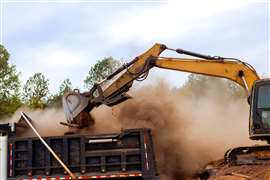 Repeated filter plugging, declining efficiency, injector wear are all signs that machine could be heading towards mechanical failure.
At this point, annual injector replacement costs alone were approaching US$280,000, with additional fuel-related service costs, such as premature filter plugging, adding another US$64,000 to the annual bill.
Testing showed that particulate contamination in the fuel exceeded the levels modern high-pressure common rail systems are designed to tolerate.
The company called in Donaldson, who helped it initiate a contamination-control strategy focused on cleaning fuel before dispensing, protecting storage tanks from airborne contamination and improving overall fuel handling practices.
The result was a dramatic reduction in injector failures and fuel-related service interruptions, and a stabilization of operations.
In high-utilization environments like aggregates, concrete and construction, that kind of reliability is worth far more than the cost of the filtration hardware.
Contamination control as part of an uptime culture
Another shift occurring across the industry is the growing recognition that contamination control is not solely a maintenance department responsibility.
Operators, service technicians, fleet managers and site personnel all play a role in protecting equipment health.
Those using machines every day are often the first to notice early warning signs, such as sluggish hydraulic response, repeated filter changes, difficult starts and so on. Catching those indicators early can help prevent larger failures later.
According to Blevins, “There’s definitely more awareness now of the need to understand how contamination enters a system in the first place and preventing it before serious damage occurs.”
That mindset is pushing more fleets toward broader contamination-management strategies that include:
- Better fuel storage and handling practices
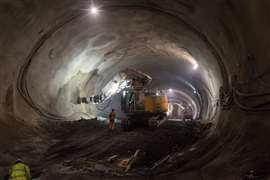 Managing contamination is essential in harsh operating environments, where equipment is exposed to airborne matter. (Image: Adobe Stock)
- Improved bulk tank protection
- Cleaner dispensing systems
- Hydraulic reservoir protection
- More consistent fluid analysis and monitoring
- Increased operator awareness and reporting
In many cases, these changes are relatively straightforward compared with the cost of repairing modern fuel systems or hydraulic components.
The challenge of ‘low-cost’ filtration
Cost pressure remains a reality across construction and heavy equipment sectors, particularly when it comes to consumables and maintenance spending.
But contamination control experts argue that focusing only on upfront purchase price can be misleading. A lower-cost filter that allows increased contamination into a system may ultimately create far higher downstream costs through accelerated wear, shorter component life and unexpected downtime.
“Contamination problems can build slowly over time,” says Gram. “You may not connect a component failure six months later to filtration decisions made earlier. But the relationship is often there.”
That is particularly relevant for fleet owners looking to extend equipment life cycles or maximize the resale value of assets. Cleaner systems generally mean less wear accumulation over the life of the machine.
Prevention is always better than cure
The construction industry has always accepted that downtime is never going to be eliminated. Machines operating in demanding environments will eventually require repairs and maintenance.
Contamination, however, is one of the few risks to machine reliability that can be reduced significantly through relatively simple preventive measures.
And as equipment technology continues to advance, the importance of fluid cleanliness is only likely to grow.
For contractors and fleet operators focused on uptime, the bigger question may no longer be whether contamination control matters, but whether treating it as an afterthought is a risk they can still afford to take.
Donaldson experts to describe contamination issues in upcoming webinar
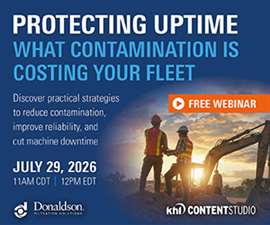
On July 29 at 11am (Central Time), Matt Gram and Gabriel Blevins will take part in the live KHL webinar, Protecting uptime: What contamination is costing your fleet.
Equipment downtime is one of the most significant cost pressures in construction, and Matt and Gabriel will describe how more failures than you might think originate from contamination in fuel and hydraulic systems.
The webinar will examine how this impacts equipment reliability in real-world conditions.
From bulk fuel storage on site to hydraulic system maintenance, the discussion will focus on practical steps construction professionals can take to reduce risk, improve uptime and get more from their assets.
Attendees will gain a clearer understanding of how relatively simple changes in maintenance practices can deliver significant operational benefits.
Key topics:
- Where contamination occurs in real jobsite conditions (fuel, hydraulics, storage, handling)
- The true cost of downtime – repairs, labor, delays, productivity loss
- How to strengthen preventative maintenance strategies with practical steps
- What operators, technicians and decision-makers can each do differently
To attend this free event, simply register here.
A recording of the event will be emailed to all registrants
--------
This article was produced by KHL Content Studio, in collaboration with experts from Donaldson Company
--------
All uncredited images courtesy of Donaldson Company
--------