Two-tower gantry for ALE in Peru
14 September 2011
.gif)
International transport and lifting company ALE used a bespoke two-tower gantry system to overcome a range of challenges on a petrochemical project in Peru.
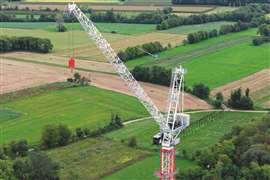
The 60 metre tall self-erecting gantry was used to install a 51 m de-ethaniser column weighing 463 tonnes. It was engineered for the Malvinas Plant expansion project in the Peruvian jungle. Strand jacks stabilised the tower that carried two 500 tonne units for lifting. The tailing gantry had an hydraulic 500 tonne strand jack for retaining. Installation took nine hours.
Using this type of gantry for ALE's biggest lift in Peru meant that the amount of material on site was less than the typical A-frame system. It also offered more flexibility on time scales than a crane, ALE said.
Challenges included limited availability of cranes in Latin America and restricted access to the site. Hernán Asensio, ALE project manager said, "We developed the self erecting gantry so that it could be fully assembled on site to adapt to the limited river transportation - there were also no existing roads to the site".
The main lift gantry was assembled using a small, locally available crane to lift it from the ground to around 30 degrees. A gantry and strand jacks were then used to lift it the remaining 60 degrees. Once the main lift gantry was fully rigged, the other gantry was reassembled in a different configuration to be the tailing gantry to install the column.