What smarter cooling can do for the next generation of heavy equipment
Partner Content produced by KHL Content Studio
20 August 2026
Michael Hogan, Team Lead - Key Accounts Manager at Cleanfix, describes new cooling technology, its benefits and the industry’s changing perspective on cooling and cleaning…
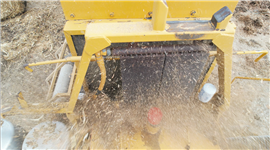 Automatic cooler package cleaning from Cleanfix helps keep performance consistent and eliminate equipment stoppages for cleaning and overheating
I regularly speak with OEM engineers, and it’s clear that cooling is no longer something that gets squeezed into the remaining space once the rest of the machine has been designed. It has become one of the starting points.
That shift reflects the reality of modern heavy equipment. Machines are expected to deliver more power, meet tighter emissions and noise requirements, fit into increasingly compact packages and remain productive in some of the harshest operating environments.
Cooling sits at the centre of all those demands, because every watt of energy spent managing heat is energy that isn’t doing productive work.
Rethinking what efficient cooling really means
It’s wrong to assume that when cooling demand increases, the answer is simply to fit a bigger fan.
In reality, fan diameter is only one variable. Blade pitch, blade profile, airflow through the cooling pack, shroud geometry and operating speed all interact.
The best solution frequently comes from optimising several smaller parameters instead of making one major change.
We encourage engineers to think about cooling efficiency before cooling size.
Of course, every machine needs sufficient cooling capacity, but nobody wants the largest cooling system possible. The goal is to have exactly the cooling capacity required – then maximise efficiency within that envelope.
Variable-pitch technology makes that possible because airflow can be matched to actual operating conditions rather than permanent worst-case assumptions.
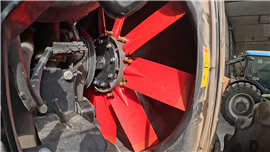 Cleanfix fans allow OEMs to use the already available engine fan drive for less complex engine cooling systems overall
Instead of designing around a peak demand that is not often likely to occur, machines can deliver maximum cooling when it’s genuinely needed while avoiding unnecessary fan power, fuel consumption and noise for the rest of the working day.
Clean cooling is efficient cooling
Also, cooling performance isn’t determined only by the fan. Keeping the heat exchanger clean is equally important.
In basic terms, a dirty radiator behaves like it’s wrapped in an insulating blanket. Debris covers the surfaces designed to transfer heat while simultaneously restricting airflow through the core.
Those two effects combine to reduce cooling performance long before an operator will see an overheating warning.
In practice, the fan simply works harder to compensate, consuming more energy while delivering less efficient cooling.
By the time overheating becomes obvious, efficiency has already been declining for some time.
That’s one reason automated reversing cycles have become increasingly valuable. Rather than relying on manual cleaning when temperatures rise, scheduled cleaning keeps airflow consistent throughout the working day.
Different applications naturally require different cleaning intervals, but maintaining cleaner radiators means the cooling system spends less time fighting unnecessary resistance and more time operating as intended.
Simplicity can outperform complexity
 Michael Hogan, Team Lead - Key Accounts Manager with Cleanfix
Another trend is that a lot of OEMs automatically assume more sophisticated cooling requires more complicated systems. I don’t necessarily agree with that.
In many cases, a conventional belt-driven arrangement, combined with variable-pitch blades, can deliver many of the same advantages as more complex hydraulic solutions, while keeping the overall system simpler.
Reducing components doesn’t mean compromising performance – it can actually improve reliability while making packaging and maintenance easier.
The same thinking applies to reversing. A blade-pivoting fan maintains airflow while delivering a much stronger cleaning blast than systems that must first slow down and reverse rotational direction.
It’s a relatively subtle engineering difference, but one that has meaningful implications for machine performance in demanding environments.
Better conversations create better machines
One of the biggest changes we’ve seen recently isn’t technical at all – it’s cultural.
More OEMs are recognising that cooling deserves specialist attention earlier in the design process.
That’s especially valuable for smaller engineering teams, where cooling is only one of many competing priorities.
Early collaboration allows engineers to understand the full range of options before committing to more complex or less efficient solutions.
Ultimately, I think the industry is moving towards a more mature understanding of cooling – and it’s not about installing the biggest radiator or the largest fan.
It’s now about using airflow intelligently, maintaining clean heat exchangers and designing systems that respond to real operating conditions, as opposed to theoretical extremes.
For me, that’s what “less is more” really means: less unnecessary complexity, less wasted energy and less downtime – while delivering more efficient, productive machines where it matters most.
--------
All images courtesy of Cleanfix
--------