Why diesel still matters in a multi-fuel future
Partner Content produced by KHL Content Studio
02 October 2026
In the face of ongoing geopolitical uncertainty, energy security concerns and increasingly ambitious net-zero targets, engine manufacturers have been prompted to explore alternatives to conventional diesel.
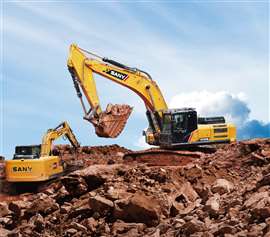 For high-duty applications operating through long shifts, power availability and refuelling time are critical considerations
This would seem prudent given the current unpredictability of fuel prices and supply, and development is now accelerating around engines capable of operating on lower-carbon and alternative fuels.
A good deal of R&D focus has shifted to alternatives like hydrogen, which can be produced locally and offers emissions-free power (at point of use).
With impressively short turnaround times, these hydrogen engines have been unveiled to the market, but there are drawbacks: hydrogen production is limited, it’s expensive and, when derived from natural gas, it loses its green credentials.
Further complicating the situation, the anticipated shortfall in diesel supply has never fully materialized, with supplies of refined fuel from the Middle East, India and Turkey largely making up any shortfall.
Legislation compliance
 Leen Stolk, manager of Customer Engineering for Europe and the UK at Cummins
With the diesel fuel market showing its resilience, engine OEMs have been left holding brand new hydrogen power solutions which, while technically impressive, are more expensive to buy, package and operate than their diesel equivalents.
But there are other agents at work. In response to local pollution levels and wider concerns about climate change, both regional and local governments have been drafting legislation requiring the use of low- and zero-emissions power solutions across a range of applications and settings.
It is this, says Leen Stolk, manager of Customer Engineering for Europe and the UK at Cummins, that has underwritten the continued development of new solutions that can use other alternative fuels.
“We are living in very interesting times,” says Stolk. “For many decades, diesel was the fuel of choice for off-highway equipment and on-highway trucks. But we’ve entered a time of transition across many areas, and this has prompted development of solutions using alternative fuels.
“We have our hydrogen internal combustion (IC) engines, but our diesel engines are approved for use with HVO [hydrotreated vegetable oil] and that means customers have the choice to use a low-emission alternative to diesel.”
Stolk points out that the work to improve diesel engine performance continues at pace with the goal of further improving fuel efficiency and reducing engine emissions.
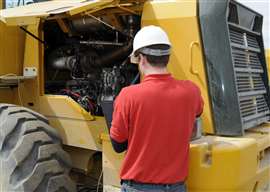 Engine development is focused on combining reliability and performance with improved efficiency and lower total cost of ownership
“One of the prime reasons for continuing tech development is legislation, the changes demanded by governments,” he says.
“But machine manufacturers are also changing their requirements, with the goal of improving the customer’s total cost of ownership [TCO].
“The more efficient the operation of a machine, the less it will cost to run and that helps to amortize the initial investment made to buy that product.”
Diesel misconceptions
In fact, Stolk believes there is much more to come from diesel.
“We have not yet reached the end of combustion technology,” he says. “There’s still a lot of development, particularly in cases where machine builders want high-efficiency engines that have a smaller footprint, but where there is also no loss in power output. We’re essentially delivering higher power density.
“Maybe IC engines could ultimately be phased out in Europe and North America, but we have to consider countries in Asia and Africa which are dependent on diesel power to build their infrastructure and their economies.
“They just don’t have the availability of alternative fuels to support a switchover.”
It’s not that these regions would never make the change to alternative fuels, says Stolk, but before that happens, making IC engines ‘future ready’ will help to improve TCO and reduce any environmental impact.
“In my mind, a future-ready engine is productive, but can also deliver a low total cost of ownership,” he says. “But also, it has to combine reliability and the performance users expect.
“A lot of that comes down to the optimization process we go through when working with an OEM as they build a new machine.”
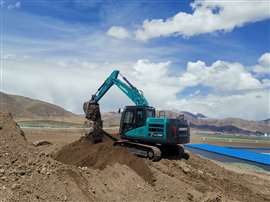 Powertrain decisions need to reflect the machine’s application and duty cycle, rather than following a single industry-wide approach
Diesel versus HVO
Electrification is definitely making headway in the construction market. But most machines using battery packs today are smaller and suitable for jobs where the power requirement is not too high.
Stolk says selection of the correct power choice is critical to the success of a new machine – and the success of the customer using that machine.
“I think it’s a case of discussing the benefits of each power type and what is the best fit for the application and the application duty cycle.
“If there are time limitations on the project, you can’t have any downtime to recharge battery packs, so diesel, HVO or possibly hydrogen – if there’s storage – are the only choices.”
HVO is a drop-in substitute for diesel fuel which has already been certified by Cummins for use with the company’s diesel engines.
It offers the further benefit of being CO2-neutral at point of use, as the biomass used to produce the fuel will have removed an equivalent amount of CO2 from the atmosphere. HVO, though, does not eliminate engine emissions and Stolk says there are other factors to take into consideration.
“Because we’ve certified HVO, customers can choose which fuel to use. But it’s less energy-dense than standard diesel fuel, so there’s a little less power output from the same engine.
“Also, there’s a cost component, which could impact TCO. If diesel prices increase then HVO might become the fuel of choice, but until then we expect that price will dictate choice.”
There should be sufficient HVO in the market, at least in the short term, as the price serves to limit total users. Should that change, Stolk says that could see demand outstrip supply.
 Diesel supports demanding, time-critical infrastructure projects where alternative fuel and charging networks can be limited. Image: Getty
Power choice
For machine buyers, Stolk says selection of the best power solution comes down to application. For example, in cases where machines are working in an enclosed space – such as material handling at seaports – battery-powered machines with zero emissions are potentially a good choice.
But in cases like this, OEMs are frequently asked to supply an entire solution, including the machines, charging facilities and other peripherals.
“With all this information included in the tender, the OEM needs to switch from a machine supplier to a project manager,” says Stolk. “That even carries over, where the OEM asks us [Cummins] what we can provide in terms of support.”
He points out that cost is also an issue, but that can possibly be offset through government grants or similar.
Beyond location, matching power choice to the duty cycle is key to successful machine implementation – but there are issues.
“There are vast differences between duty cycles, Stolk says, “and we can see that data via machine telematics, but that’s not always available.
“If we’re to advance in this area, I think we’d need to be more collaborative with the OEMs and customers to get a better idea of the duty cycle and show them the benefit of sharing that data.”
Future forward
There is potentially a future where internal combustion engines will emit no nitrogen oxides (NOx) or particulate matter (PM). But while impressive, Stolk says it is the application which will ultimately define the power choice.
 Collaboration between engine manufacturers, OEMs and end users can help match power solutions to real-world operating needs
“We will continue to deliver power solutions to OEMs based on the machines and the proposed customer applications,” says Stolk. “We could even get to the point where an application already has a preferred powertrain choice.”
At least for now, he says, location will also play a role. “Many ports in Europe are already using electric terminal tractors and other material handling equipment. But go to places like Ivory Coast in Africa, and likely there’s no support infrastructure for these vehicles and diesel is the only available option.”
Stolk believes there is still potential for hydrogen, particularly in areas where industry is producing the gas as an otherwise waste byproduct of existing industry – and that includes both the hydrogen IC engine and fuel cell technology.
So, potentially hydrogen could join diesel, HVO and battery-electric power for a slice of the power market.
Ultimately, though, Stolk says, “I think I will be long gone before we see diesel engines withdrawn from the machine power market.”
How close can combustion engines get to zero emissions?
Asked if there could be a future where Internal combustion engines emit no NOx or particulates due to engine efficiency and improvements in the emissions systems, Leen Stolk says the potential is already there.
“Customers are asking for machines with smaller engines but with a similar power output. That downsizing has already helped to cut NOx and particulates – and CO2.
“I’ve seen test reports looking at the future path of emissions reduction and those documents include examples of combustion engines working at a constant speed that produce no NOx.
“As for particulates, that’s all about filters – the best filter is a full filter. But you can’t expect a system to work flawlessly at cold start in -20C, so there’s still work to be done there.
“Cummins has test cells that have the data checked by the US EPA [Environmental Protection Agency] and those figures show we’re on the right track.”
--------
This article was produced by KHL Content Studio, in collaboration with experts from Cummins
--------
All uncredited images courtesy of Cummins
--------