Will fuel-agnostic engines power the next era of construction?
Partner Content produced by KHL Content Studio
12 June 2026
In the construction industry, the debate around future power systems has often been framed as a contest between diesel, battery-electric and hydrogen technologies.
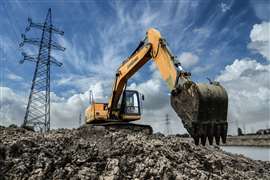 Some of the world’s heaviest construction equipment is powered by Cummins engines
In fact, the path forward has proved to be considerably more complex than early forecasts suggested.
Across the off-highway sector, manufacturers and fleet owners are today facing challenges including regional regulations and uneven infrastructure development, as well as highly specialised machine applications.
In this environment, flexibility is emerging as a central theme in long-term powertrain planning.
One concept gaining attention is the fuel-agnostic engine platform – a common engine architecture designed to accommodate multiple fuel types while maintaining performance characteristics and operational simplicity.
Jeremy Harsin, Senior Director of Off-Highway Powertrain Engineering at Cummins, believes this approach answers the questions being posed by the construction sector more closely than any single-technology solution.
“Fuel agnostic engines, like Cummins HELM [High Efficiency Low Emissions, Multiple Fuels], are designed with fuel flexibility in mind,” says Harsin. “The concept is aimed at meeting customers where they are at during their powertrain journey.”
Why flexibility is vital in off-highway power
 Jeremy Harsin, Senior Director of Off-Highway Powertrain Engineering at Cummins
Unlike the on-highway sector, where vehicle duty cycles and operating environments are relatively standardised, off-highway equipment includes a wide range of machine types and operating conditions. That creates significant challenges for any attempt to impose a universal transition strategy.
“Off-highway is by far the most complex and fragmented market we serve,” says Harsin. “Cummins alone serves hundreds of OEMs, each with their own applications, of which many are highly specialized.
“Considering these facts, it is not realistic to assume a one-size-fits-all – or even most – approach would be palatable for the market.”
Fuel-agnostic architectures aim to address the challenge by incorporating multiple fuel variants from a largely common engine platform.
In simple terms, the lower portion of the engine remains substantially shared, while systems such as air handling, fuel delivery and aftertreatment are adapted to suit different fuels.
The fuels under consideration can include advanced diesel, natural gas, gasoline and hydrogen, depending on market demand and infrastructure readiness.
For OEMs, this potentially reduces engineering complexity and helps preserve investment in existing machine platforms and driveline layouts.
“The concept aims to make OEM life easier,” says Harsin, “allowing them to leverage common driveline components from the flywheel back.”
The infrastructure challenge for alternative fuels
While the noise around alternative fuels continues to grow louder, adoption across construction remains uneven. In many regions, the availability of supporting infrastructure is still the biggest barrier.
“End users are met with real and significant infrastructure maturity challenges which must be remedied to effectively roll out these solutions in any meaningful way,” says Harsin.
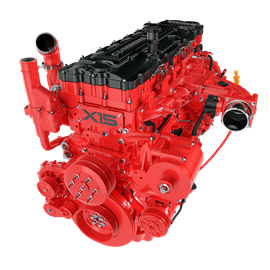 The next generation X15 engine will be built on the Cummins HELM platform
He adds that the challenge is particularly acute in construction, where machines frequently operate across temporary or remote sites, with limited access to specialist fuelling systems.
For that reason, he expects adoption to emerge first in more controlled operating environments.
“Contained ecosystems – for example seaports – are potential areas where demand may emerge first, given they have a captive population at a dedicated site,” he explains.
“General construction sites which use more nomadic equipment would see increased challenges with fuel availability beyond diesel.”
This reality is one reason why advanced diesel technologies, alongside renewable and drop-in biofuels such as HVO, will continue to have their say in any decarbonisation discussions.
“Advanced diesel is going to be hard to replace,” says Harsin. “Much of the infrastructure buildout previously mentioned will be reliant on advanced diesel equipment to complete.”
Can alternatives match diesel performance?
For construction fleets, decarbonisation targets, while increasingly important, are unlikely to overshadow machine productivity.
Equipment must of course still deliver the torque, transient response and uptime required by heavy-duty applications.
That creates important engineering trade-offs.
“If you’re comparing a given engine platform top diesel torque curve to something like a H2 curve, you would see a reduction in capability with H2,” says Harsin. “Applications with high expectations on transient response will be challenging for non-diesel to match.”
The challenge, therefore, is not simply about enabling different fuels, but also making sure those fuels can support operating requirements in the real world.
“End users care about getting the work done,” says Harsin. “How the machine feels as they are doing that is something we apply effort around to optimize.”
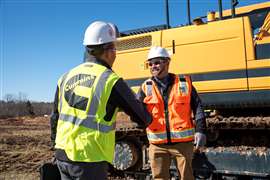 A Cummins representative meets a customer on site
At the same time, total cost of ownership is an increasingly important consideration. While alternative fuel technologies continue to develop, the scale and affordability of these platforms are likely to determine the pace of broader adoption.
“In the end, barring incentives, technologies need to be viable from a TCO perspective, to ensure end owner profitability remains intact,” Harsin explains.
What OEMs need to consider today
Large-scale adoption of fuel-agnostic systems may still be some years away, but OEMs are already being encouraged to consider their future packaging requirements when developing new machine platforms.
“They should have in mind things that impact future chassis alterations,” says Harsin. “The metal on heavy machines is not easily changed and tooling is expensive.”
While engine block dimensions are likely to remain largely comparable for the different fuels, the fuel storage requirements can differ dramatically.
“Consider again a comparison between diesel and an equivalent H2 based solution,” Harsin says. “H2 requires roughly eight times the fuel tank volume as diesel.”
That introduces more questions around machine architecture, refuelling intervals and operational logistics – factors that OEMs will increasingly need to consider as part of the design phase.
Fuel choice, fleet planning and future regulation
Although the term “fuel agnostic” can imply interchangeability, Harsin is clear that individual machines are not designed to switch between fuels in operation.
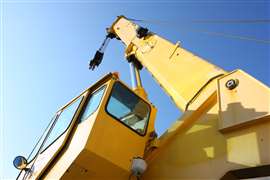 Cummins power expertise can be found within everything from a compact loader to a heavy crane and a mining truck
“To be clear,” he says, “at an individual machine level, the fuel-agnostic concept does not apply. The Cummins HELM platforms offer solutions that flex with fuel types but one machine cannot be swapped in practice.”
Instead, the value lies in helping the industry prepare for uncertain conditions – in terms of both regulation and markets – over the longer term.
“These engines allow fleet owners to future plan if they are required to meet certain mix requirements,” Harsin says.
For many OEMs, these options for the longer-term are likely to become more important as regional emissions legislation develops at different speeds around the world.
More gradual transition than sudden shift
Despite the industry attention around alternative fuels and electrification, Harsin does not expect the overall construction power mix to shift dramatically in the immediate future.
“Overall, I expect the next few years to be very similar to current power mix,” he says, “although there will probably be pockets where this will not be true.” Here he offers the example of the rapid growth of electric wheel loaders in China’s domestic market.
In truth, today’s construction sector is in a phase that seems less about technological certainty and more about keeping options open.
In that context, fuel-agnostic platforms may be less a temporary stopgap and more an acknowledgement that the future power landscape will not be dominated by a single solution.
“As technologies evolve and scale, they start becoming more practical for off-highway to leverage,” says Harsin, who concludes, “Our focus at Cummins remains on providing reliable power solutions to the market at the time they are needed.”
--------
This article was produced by KHL Content Studio, in collaboration with experts from Cummins
--------
All images courtesy of Cummins
--------