Approval of US$1.9 billion Sky Way project
07 June 2018
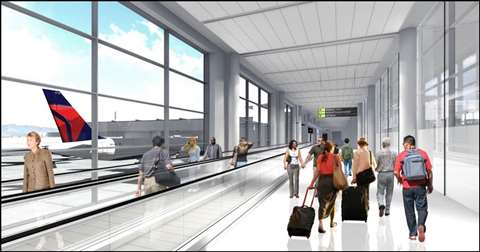
The Los Angeles World Airports (LAWA) board of commissioners recently approved a US$1.86 billion modernisation project at Los Angeles International Airprot (LAX), in the US.
The approval paves the way for construction on the Sky Way scheme to begin in the autumn, overseen by Delta Air Lines.
The work to construct a 27-gate complex at terminals two and three, and a secure connection to the Tom Bradley International Terminal (terminal B), will include the building of a new structure with a central lobby, security checkpoint and baggage claim.
Terminal three will also be completely renovated, a bridge will be created to connect terminals two, three and B, along with a security checkpoint for domestic travellers transferring to international flights.
New retail, dining and bathroom facilities will be constructed, emergency power generators will be installed, and dual taxi lanes will be created on the airfield.
The plans also include the creation of a connection to the future people mover, which is scheduled for completion in 2023.
Delta’s CEO Ed Bastian said, “LAX is one of the most important hubs in our network where we operate more than 170 daily flights and connect more passengers to our partner airlines than anywhere else in the US.”
This project is part of a US$12 billion capital programme that will see Delta facilities across the country undergo significant renovations, including major work at New York’s LaGuardia airport.