Armatron unveils high-speed 3D construction printer
15 January 2020
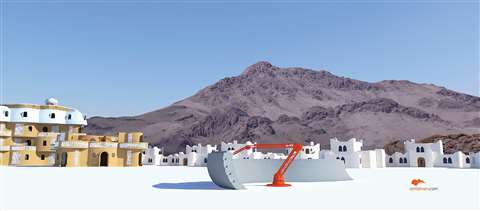
Armatron Systems, a 3D printing specialist based in Arizona, has been granted a patent for a construction printing technology that the company claims can create an 18m slab of concrete in less than a minute.
The new Armatron printer uses a high-speed extrusion process to print with a great deal of flexibility and using single-pass construction, with fewer components.
The company says its technology enables structures to be built at between 25 and 50 times faster than using conventional methods, as well as dramatically reducing the amount of waste material produced during the construction process.
Armatron also claims contractors are able to build to an almost limitless number of designs using the technology.
Blair Souter, co-founder and COO of Armatron, described the process of constructing with the new 3D printer, saying, “With each brick being able to interlock with the next brick, you can actually cast so you have curves, domes, arches, vaults. All the most popular, aesthetically pleasing and value-increasing architectural motifs can be cast for the same price as a box.
“We can also optimise and tailor the curing environment to the individual mix. We can cast in more inclement weather conditions – that normally is a key limitation of reinforced concrete construction. We can even cast underwater.”