More record results for Palfinger
19 February 2020
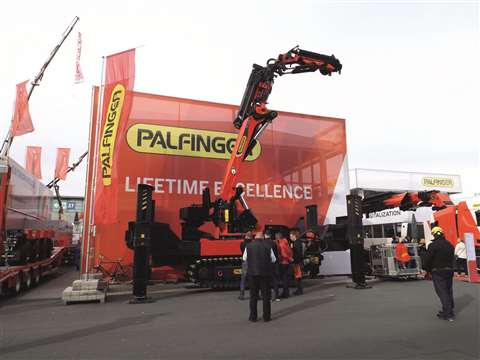
Revenue at Palfinger Group for the full year 2019 was posted at €1,753.8 million (US$ 1,893.5 million), up 8.6 percent from the €1,615.6 million ($ 1,744.3 million) of 2018.
The Austria-based loader crane, aerial work platform and material handling equipment manufacturer reached a new record high in several areas. The new sales record was attributed to higher demand in Europe, North America, Russia and China.
Other records broken in the year were for earnings before interest and taxes (EBIT) and consolidated net profit. The record EBIT figure of €149 million ($161 million) was up by 17.4% on 2018. Consolidated net profit was up by 38.1% to €80 million ($86 million) from the €58 million ($63 million) of 2018. EBITDA increased 13.7% from €196.7 million to €223.6 million ($213 to $241 million). The EBITDA margin in 2019 was 12.8%, up from 12.2% in 2018 and the EBIT margin was 8.5%, up from 7.9% in 2018.
Looking ahead Palfinger stated, “Despite slower growth in the global economy, the more challenging market environment in Europe, and shifts in the product mix, Palfinger expects a strong fiscal year 2020 even though significantly lower profitability is anticipated in the first quarter of 2020 compared with the outstanding first quarter of 2019.”
Further on, the group said it remained “committed to its goals for 2022: total revenues of €2 billion ($2,159 million) as well as an average EBIT margin and average ROCE [return on capital employed] of 10% above and beyond the economic cycle.”