Kobelco redesigns mini excavator
09 October 2020
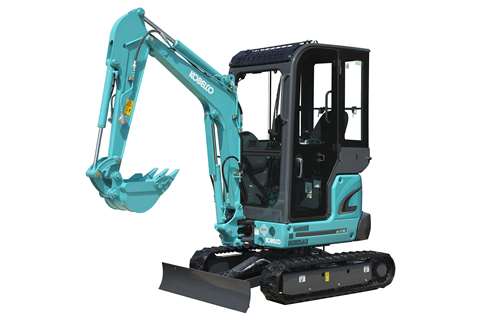
Kobelco has re-launched its SK17SR mini excavator, making it Stage V compliant and adding design features such as an upgraded cab and a number of new safety features.
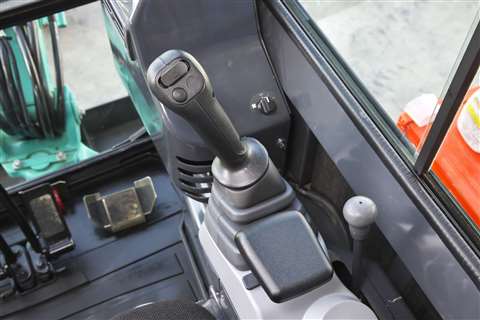
The company says significant improvements have been made to the new SK17SR-3E to enhance operator comfort, including a new Grammar-branded reclining seat and wrist rests replacing full arm rests.
The switches within the cab are now fully back-lit for ease of use and LED working lights have been placed on the machine’s boom, to improve visibility.
Designed for working in urban spaces, the SK17SR-3E retains the compact design of its predecessor, with zero tail swing in the canopy version (short tail swing in the cabin version), allowing it to swing through 180 degrees within a width of 2m.
The excavator’s crawlers are retractable (from 1,320mm down to 990mm), allowing it to pass through 1m gaps. It also features a forged boom top, plus hydraulic hoses housed within a cast-iron swing bracket, adding to the machine’s durability.
Peter Stuijt, product manager at Kobelco Construction Machinery Europe, said, “When developing our mini excavators, a key focus for us is to ensure that performance is not compromised by the machine’s small size. In the case of the SK17SR-3E, the ,machine is not only competitive in terms of arm crowding force (8.7kN) and bucket digging force (15.2kN), but its newly designed and comfortable interior also makes it particularly attractive to operators.”