Location named for Hyperloop Certification Center

14 October 2020
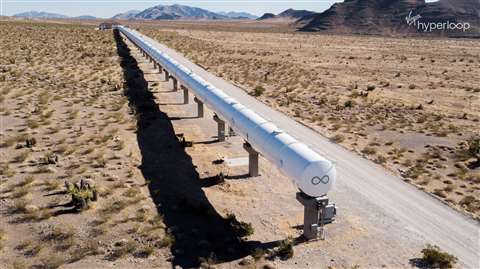
Virgin Hyperloop announces the global Hyperloop Certification Center (HCC) will be located in the state of West Virginia, US.
“Today is one of the most exciting days in Virgin Hyperloop’s history,” says Sir Richard Branson, founder of the Virgin Group. “The Hyperloop Certification Center is the start of the hyperloop journey for West Virginia, for the United States, and for the world. We’re one step closer to making hyperloop travel a reality for people everywhere.”
By combining an ultra-efficient electric motor, magnetic levitation, and a low-drag environment, hyperloop systems can carry more people than a subway, at airline speeds, and with zero direct emissions.
With the goal to be safety certified by 2025 and begin commercial operations by 2030, the 100% electric Virgin Hyperloop system could play a key role in helping achieve the European Green Deal’s climate-neutrality objective.
The HCC provides an opportunity for regulators, governments, companies, and universities from around the world to forge global, groundbreaking partnerships surrounding all elements of this new transportation technology.
“The Hyperloop Certification Center will be a global hub for hyperloop,” says Jay Walder, CEO of Virgin Hyperloop. “Our goal is to bring together authorities from around the world to set global safety and industry standards for this new mode of ultra-fast, zero-emissions mode of transport.”
Interested to learn more? Check out this video from Virgin’s hyperloop One explaining how hyperloops work.