New hydroelectric power plant in the Himalayas

23 March 2022
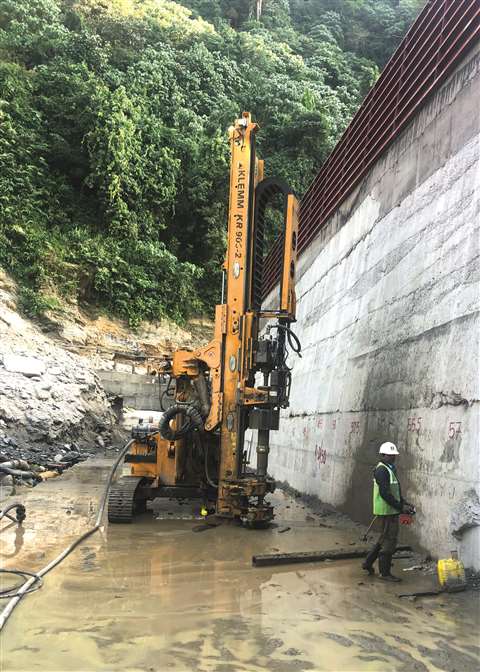
Bauer Engineering India Pvt. Ltd., a subsidiary of Bauer, has been helping the construction of a new hydroelectric power plant on the Arun River in Nepal, which flows from Tibet through the Himalayas into China.
The company was tasked by Indian company Jaiprakash Associates with the construction of a cut-off wall as part of the project Arun III HEP. The goal is to achieve a seal and reduce seepage water below the upstream cofferdam and in the left and right abutments.
The scope of service provided by Bauer includes the execution of 3,500 running meters of drilling and injection work on the cofferdam. In the granular construction soil, composed of sand, gravel, rubble and boulders, the pore injections are executed by means of tube-à-manchette and annular grouting
“Using the pore injections, we are able to fill the pores in the very loose soil with cement slurry and thereby reduce its permeability,” said Satish Kumar, project manager.“Injections require a high degree of quality assurance and quality control. We are able to meet the strict demands thanks to our many years of experience.”
In addition to the pore injections, Bauer will also carry out rock grouting in order to fill gaps, fractures and cavities in the rock.
Due to the remote location in the Himalayas, both construction soil and logistics pose challenges. The schedule is very tight: this is because snow starts to melt in March, causing the water level in the river to rise and making work more difficult.
The work executed by Bauer started in December 2021 and is expected to be completed by May 2022. The new hydroelectric power plant is expected to produce up to 900MW of electricity.