Construction starts on second Beijing Airport

05 January 2015
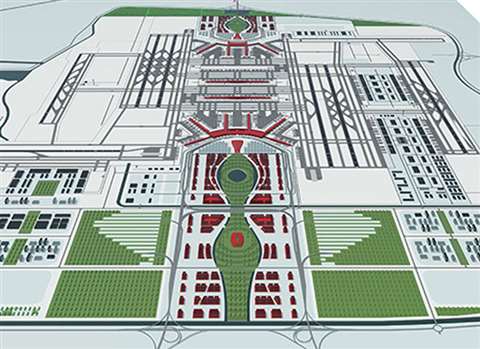
Construction has begun on a new airport to serve the Chinese capital, Beijing. Ground breaking came at the end of December, following approval from China’s National Development and Reform Commission.
Beijing Daxing International Airport will be built some 45 km south of the city centre. The CNY 80 billion (US$ 12.9 billion) project is designed to take pressure off the existing Beijing Capital Airport to the north-east of the city, the third terminal of which was only completed in 2008, ahead of the Beijing Olympic Games.
The new airport is expected to take four years to build and will include four runways, a 700,000 m2 terminal building and 150 gate locations. Further development phases are planned once the airport is open.
The initial master plan for the airport was developed by NACO, a Dutch engineering consultant specialising in airports. It envisaged an eight-runway facility with a capacity of up to 130 million passengers per year.
Terminal 1 of the new complex has been designed by ADP Ingénierie, a subsidiary of Aéroports de Paris Group.
Infrastructure associated with the airport is expected to include a rail link to Beijing South station, which is located in the city on the second ring road. Direct links to the nearby cities of Tianjin and Hebei have also been mooted.
The project is due for completion in October 2018.