CTBUH ratifies height of Burj Khalifa
06 April 2010
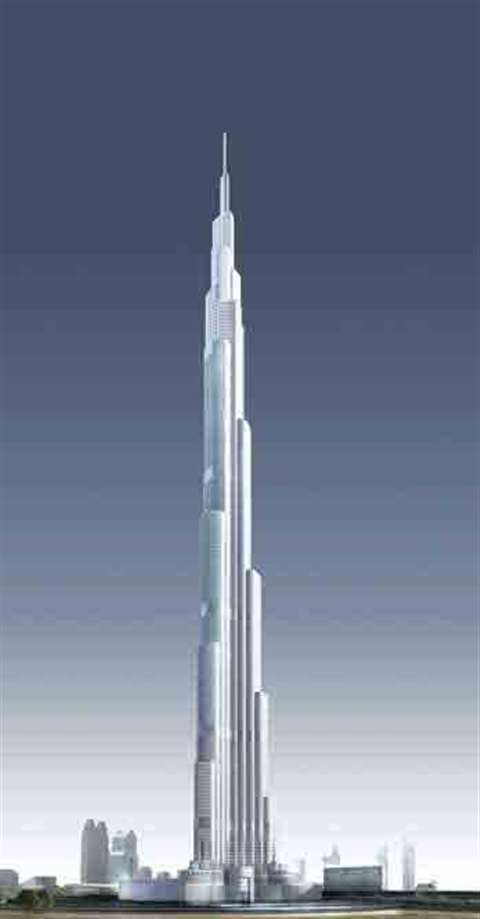
The Council on Tall Buildings and Urban Habitat (CTBUH) has confirmed the "official building height" of the Burj Khalifa (formerly the Burj Dubai) at 828 m (2716.54 ft), confirming its title as "The World's Tallest Building".
The ratification comes after the CTBUH "received and examined" detailed drawings of the Burj Khalifa submitted by its owner and developer Emaar.
With its official completion on 4 January 2010, the Burj Khalifa surpassed the previous "World's Tallest", Taipei 101, by 320 m, an increase of +61%.
The Burj Khalifa has become the 16th building to hold the title of the "World's Tallest" and stands an additional 773 m, or 15 times taller, than the world's first "tall building" (the Home Insurance Building completed in Chicago in 1885).
In addition to becoming the "World's Tallest," in the primary height category of "Height to Architectural Top", the CTBUH confirmed it has surpassed previous record heights in the "Height to Tip" and "Highest Occupied Floor" categories, listing these heights at 829.84 m (2722.57 ft) and 584.50 m (1917.65 ft) respectively.
The building also contains a record-breaking number of floors, at 163; a record previously held by New York's World Trade Center (WTC) towers at 110 floors.
The Burj Khalifa's observation deck becomes the second highest in the world at 452.10 m (1483.27 ft), surpassed only by that of the Shanghai World Financial Center at 474 m (1555.12 ft).