H&E opens third branch in Maryland

25 August 2024
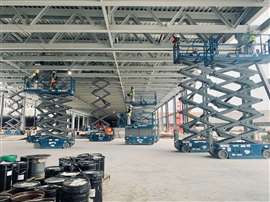 Photo: H&E Rentals
H&E Rentals (H&E) has opened a new branch in Frederick, its third location in the state of Maryland.
The facility includes a fully fenced yard area, offices and a repair shop and carries a variety of construction and general industrial equipment.
Among the equipment it specialises in is aerial lifts, earthmoving equipment, telescopic forklifts, compaction equipment and generators from the likes of Atlas Copco, Skyjack, Bomag and Case.
Branch manager David Roles said, “The location of our new Frederick branch gives H&E expanded coverage northwest of the Baltimore and Washington, D.C., metropolitan areas. We serve all of Western Maryland, along the Pennsylvania and Virginia state lines, as well as the northeast corner of West Virginia.
“H&E’s fleet is one of the youngest in the industry, and by having our Warrenton, Baltimore and Forestville branches within reach, we can source the reliable equipment customers need from an expanded line. Whether for a day, a week, a month, or a year, we will quickly deliver the right equipment for the job straight to the project site. We’re eager to show everyone how easy renting equipment can be and provide our signature higher standard of service.”
H&E has opened 27 new general rental branches across the country and acquired nine others since the second quarter of last year.
The company operates in 32 states, with branches located throughout the Pacific Northwest, West Coast, Intermountain, Southwest, Gulf Coast, Southeast, Midwest, and Mid-Atlantic regions.