

JLG sales surge helping to nearly double Oshkosh’s Q3 net
Premium Content
30 July 2013
Oshkosh Corporation’s third-quarter earnings leaped 96% as its operating margin almost doubled largely in part to the company’s access division, JLG Industries, Inc.
JLG was Oshkosh’s best-performing sector for the third quarter; sales increased 15.6% to $941.5 million compared to the same period last year. JLG’s operating income rose 75.1% to $154.5 million and its operating margin improved from 10.8% to 16.4%.
According to the company, the increase was mostly the result of higher replacement-driven demand in North America, the realization of previously announced price increases and higher aftermarket parts and service sales, which more than offset lower sales volume in Australia.
Overall for the quarter that ended June 30, Oshkosh reported a profit of $148.7 million, or $1.67 a share, up from $75.7 million, or 82 cents a share, a year prior. Oshkosh expects profit of $3.60 to $3.70 a share, compared to its projection in April of $2.90 to $3.15 a share.
While JLG sales propelled Oshkosh forward, the company cites its MOVE strategy as another bottom-line booster.
MOVE stands for: Market recovery and growth; optimize cost and capital structure; value innovation and emerging market expansion.
"We had a great quarter," said chief executive officer Charles Szews during a conference call. "Above all, our MOVE strategy is working. The progress we are making gives us confidence as we strive to reach our fiscal 2015 earnings target."
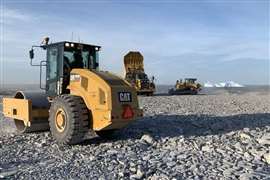
Caterpillar’s Rolf af Klinteberg on how new mapping tech can help improve consistency, reduce risk and lead to better decisions

Industry experts to discuss how businesses can build greater resilience as pressure on power infrastructure intensifies
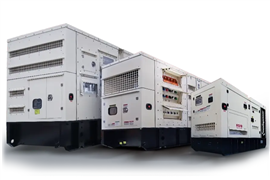
An object lesson in adapting gensets to local rules, applications and lead-time pressures – key factors in a successful market entry