Cement-free concrete pour reduces carbon emissions

14 May 2021
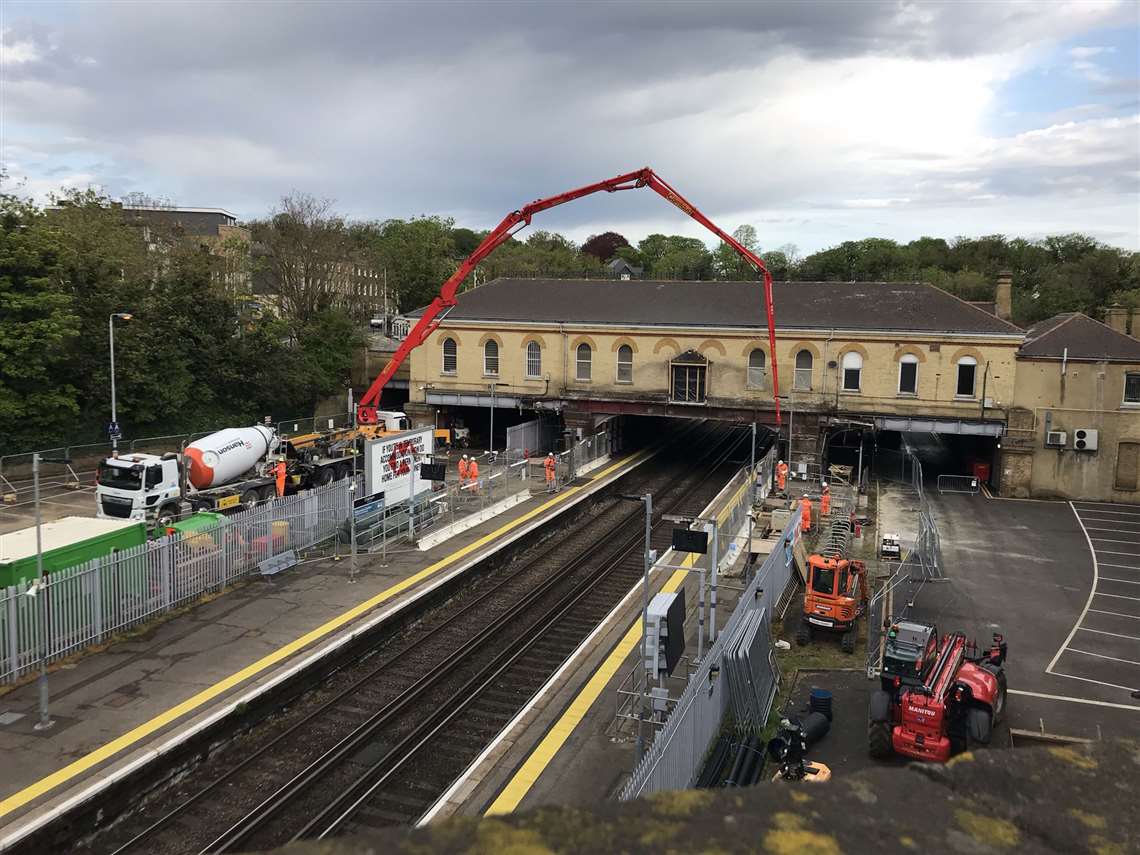 The concrete pour used cement-free concrete
Construction and civil engineering company BAM Nuttall has successfully completed the UK’s largest single pour of a new cement-free concrete on behalf of Network Rail.
The 300 cubic-metre continuous pour, which supports the foundation for a new step-free access at a railway station in Kent, UK, is the first use of the product, Cemfree, on UK rail network. Production of Cemfree reduces carbon emissions by up to 80% in comparison to traditional cement-based concrete.
According to the contractor, use of Cemfree rather than traditional concrete saved approximately 62 tonnes of carbon from entering the atmosphere – the equivalent of 230,000 miles in an average-sized diesel car.
Huw Jones, BAM Nuttall divisional director, rail, said, “On its own, traditional concrete production contributes 8% to global carbon emissions. That’s more than three times the output of the global aviation industry. That carbon footprint is largely due to the energy intensive methods that go into the production of cement, a vital component of traditional concrete.
“Seeing this product being used on site underlines our commitment to developing innovative sustainable solutions for Britain’s railway and I look forward to seeing other projects making use of it. It has the potential to make a huge contribution towards the reduction of carbon emissions across the construction industry.”
BAM says that it is currently investigating further opportunities to make use of low cement and cement-free product across the UK.