Lincon Hire orders eight 'Jumbo' platforms from Palfinger Platform
14 September 2011

Australian rental company Lincon Hire has ordered eight Jumbo platforms from Palfinger Platform, including four models over 60 m.
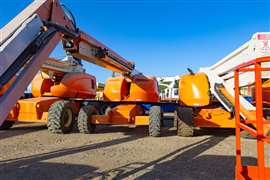
The eight machine, multi-million dollar deal, comprises two 70 m WT700 units, two 61 m WT610 models, two 45 m WT450s and two 32 m P320 lifts. The first four machines - the 61 m and 70 m units - will be delivered in January next year.
Brisbane-based Lincon Hire, which is a Palfinger Platform dealer, will add the platforms to its own rental fleet, and the order will boost to 14 the number of Palfinger platforms it owns.
David Hird, hire and sales manager for Lincon, speaking at the APEX exhibition, said; "We've been growing steadily for several years and at the moment we are very busy. We've built a reputation around the country and customers are ringing up for more machines, so we had to increase the fleet."
Lincon's main customers are in power line construction and maintenance, including power lines for Australia's buoyant mining sector. It currently has four machines working in Western Australia engaged on building power lines for mines.
Stefan Kulawik, Palfinger Platforms' director of international sales and service, meanwhile said that Palfinger Platform was strengthening its business; "We are continuing to invest in people, new technology and machines. In these times it's very important for customers to understand that we are still investing, not shrinking or standing still."
At APEX the company introduced the P210BK, its first ever 3.5 t GVW model with a fly jib, and the P300KS, a new 30 m model using the counter slew design developed by Bison Stematec and now owned by Palfinger.
The company also promoted its new GPD gravity descent system for machines in the 70-100 m range. This uses hydraulic pressure in the booms to allow the lowering of machines in the event that the engine has to be turned off or fails. The system can even raise the articulating boom to allow the operator to move away from obstructions before lowering.
For more details on the new machines see the next issue of Access International.