Yilport buys Liebherr harbour cranes
16 November 2018
International port terminal operator Yilport Holding has taken delivery of two new Liebherr LHM 600 mobile harbour cranes. They will be used at Yilport’s recently acquired terminal in Puerto Quetzal, Guatemala, Central America.
The cranes have a tower extension of 12 metres, which provides a maximum cabin height of more than 37 metres. According to Liebherr, the higher position of the operator cabin provides good visibility into deep cargo holds, enabling efficient container handling with maximum safety.
With a maximum outreach of 58 metres, twin lift capability and a lifting capacity of 104 tonnes, the LHM 600 can service vessels up to 19 container rows wide and stacked nine containers high.
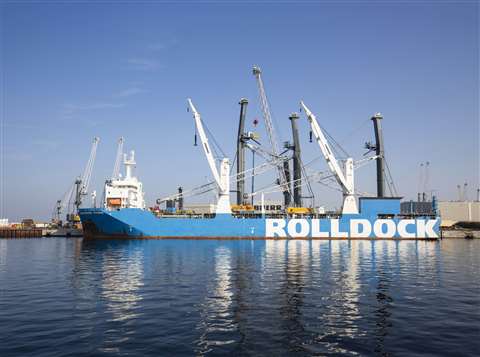
Both cranes were shipped fully erected from Germany to Guatemala by the roll-on roll-off vessel Rolldock Storm. Liebherr said this means they are ready for operation shortly after delivery.
“These new machines are an essential future investment in Yilports terminal in order to handle the new generation of vessels,” said Andreas Müller, mobile harbour cranes sales director. “Liebherr is looking forward to a co-operative and strategic partnership with the Yildirim Group [of which Yilport Holding is a subsidiary]. We are delighted that Yilport Holding trusts in our reliable cranes. Looking ahead to projects in the pipeline for the coming year, it is clear that we will continue to expand this partnership.”