New SCRA resource to help tower crane rental agreements

24 September 2021
A new tool to help tower crane companies protect themselves against unfair and biased agreements is now available to SCRA members as a free download.
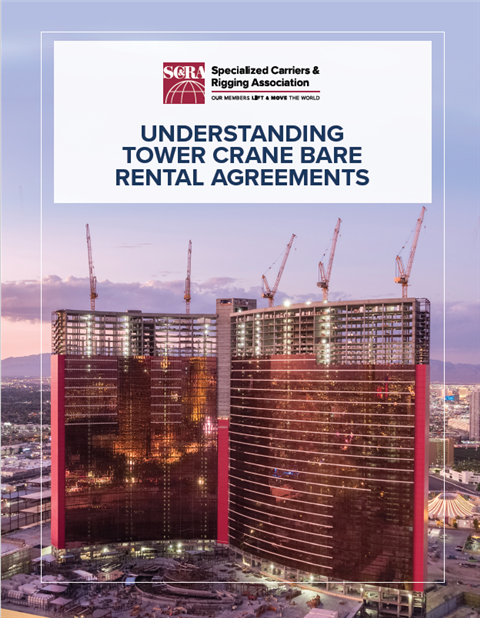
Understanding Tower Crane Bare Rental Agreements was introduced last week at the crane and rigging workshop in Chicago, USA. The new guidance was developed to assist members in understanding agreements for the industry.
“Almost everything we do today is under a contract. This guide will educate the members of the association as to what certain terms mean, what to look for, and how they affect your business and insurance liability,” said Billy Smith, NBIS, and chair of the Tower Crane Bare Rental Agreement Task Force.
Task Force Committee members who developed the resource have a wide range of qualifications from agreement administration to negotiations of agreements, to insurance. The document covers such items as:
- How to read a lessor agreement
- Agreement provisions to watch out for
- Sample agreement clause and-or language
- Insurance requirements
- Indemnity or Indemnification
- Liens and-or payments
- Dispute resolution procedures
- Contract checklist
- Lessee requirements
- OSHA compliance sample letter.
“Good contract language reduces your exposure in case of an incident,” said Michael Battaini of Sheedy Crane, who is a member of the task force responsible for the document. “This document will give you language to use in your contracts to avoid those unnecessary exposures.”
To download, click here. For more information, contact Beth O’Quinn by emailing boquinn@scranet.org