Ramboll aims to halve CO2 emissions by 2030

29 September 2022
Global design, engineering, and environmental consultancy Ramboll estimates that by 2030, the company will have reduced upfront embodied CO2 emissions from its new building projects globally by 2.5 million tonnes per year compared to 2021.
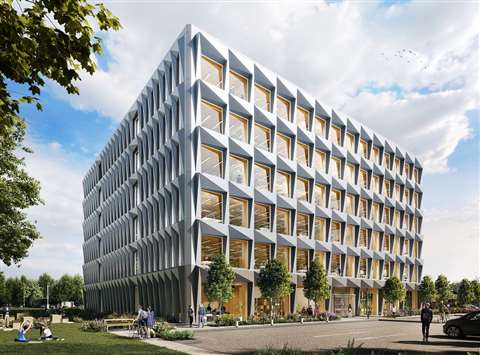 (Photo: Ramboll)
The company believes that by implementing a range of innovative techniques, they can reduce carbon from all stages of the building lifecycle, including embodied carbon; carbon emitted from manufacturing, raw material extraction, transportation, construction and building use; up to the dismantling and disposal of buildings.
The Denmark-based company has closely collaborated with the Canary Wharf Group on their low carbon concrete specification and has recently become a signatory to Climate Group’s ConcreteZero initiative, which aims for 100% net zero concrete by 2050 and has committed to using 30% low emission concrete by 2025 and 50% by 2030.
Ramboll’s Executive Director for Buildings in the UK, Andrew Henderson, said, “The challenge is enormous. When you consider population growth, the global building stock by 2060 must expand by 230 billion sqm of new construction, according to the Global Alliance for Buildings and Construction. It’s like having to build as many buildings as there are in the UK every year.
“We need to look at where we can have the biggest impact. Research shows that in new construction projects in the UK, building materials alone account for 80% of the climate impact over a 50-year period - operating energy accounts for the remaining 20%. We therefore must have a strong focus on material selection before and during the building activities for the construction of a new building, to help us meet our ambition to reduce CO2 emissions from the materials in our new building projects by 50% by 2030.”