Concept for floating electric substation

06 September 2022
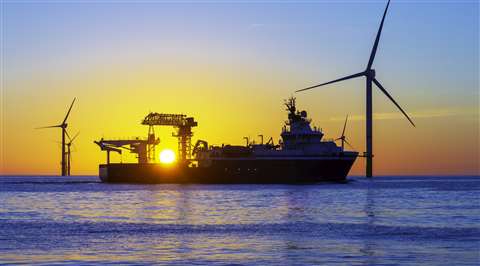
Saipem and Siemens Energy have signed a Memorandum of Understanding for the joint development of a new technology solution in the offshore wind sector, a concept design for a 500 MW high-voltage alternating current floating electrical substation for use in offshore wind farms.
Floating offshore substations, installed in deep water, are said to offer several advantages such as a lighter substructure, an easier and asset-light installation in challenging conditions as well as lower decommissioning costs.
Saipem and Siemens Energy say that their floating offshore substation concept will be based on a proven semisubmersible substructure, and it is designed to operate in the most extreme environments with enhanced stability and can be scaled up as required by clients.
In addition, the design will address the industrialisation phase as it can be adapted to fabrication and assembly infrastructures worldwide. The floating substation could represent a tangible solution for reducing the levelised cost of energy (LCOE) of floating wind farms.
Saipem’s expertise in the engineering of complex and sustainable offshore infrastructures, including floating solutions, will be combined with Siemens Energy’s broad transmission portfolio to develop a cutting-edge, standardised and scalable technology.
“Our ambition is to take advantage of Saipem and Siemens Energy unique expertise, to jointly develop a cutting-edge floating design solution for offshore substations,” said Fabrizio Botta, chief commercial officer, Saipem.
“The new concept will be an enabler to enhance offshore wind developments in deeper waters by lowering the overall infrastructure investment.”