Cummins at Bauma
01 March 2019
Stage V will be a key focus for Cummins at their stand, A4-325. Alexei Ustinov, vice president, Off-Highway Engine Business, said, “Since unveiling our Stage V construction engines at Bauma 2016, we have made great progress and are in production with all engine models from F3.8 to X15. We have over 200 machine installations completed or in progress, which is more than at Stage IV.
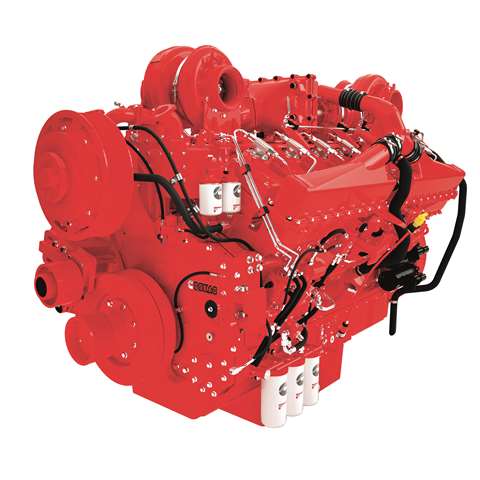
”We are developing alternate power capability such as hybrid, electric and fuel cells, however Stage V remains a key part of our plan.”
One of the engines on display, the B6.7, reflects 100 years of engine innovation and is said to offer 30% higher torque than Stage IV with 243 kW (326 hp) of power.
Also featured will be the Stage V F3.8 power unit. Delivered as a complete and ready-made power package, it comprises an engine, Single Module aftertreatment, radiator and cooling system. Stage V engines and power units are available from 75–503 kW (100–675 hp).
2019 Stage V is the first European emissions step which impacts engines above 560kW (750 hp). Cummins will debut the QSK60 Stage V engine, which is part of its 560-2611 kW (750-3500 hp) mining line up. The QSK60 is available from 1398-2125 kW (1875-2850 hp) for excavator and dump truck use.
The company will also display an electric prototype mini excavator. Powered by Cummins BM4.4E flexible battery modules (4.4 kWh each), the 3.5-ton (3.1 tonne) Hyundai excavator prototype is designed to support a full work shift and charge in under three hours.