Excavator experiment
27 February 2008
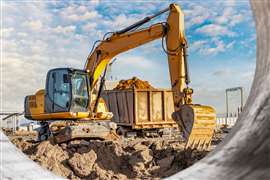
Case conducted a field test to prove the truth of claims it made about thesuperior performance, higher productivity, lower sound levels and improved fuel efficiency of its new tracked excavator, the 21 tonne CX210B. Independent evaluators had access to two identical Case tracked excavators – a CX210 and the new CX210B at a site where ground conditions were heavy and the material a sticky, waterlogged clay, a spokesman for Case said. The machines had to dig a 40 m long trench, 2 m deep to the width of the bucket. The CX210B took 23,25 minutes and used 9,13 litres of fuel, while the CX210 took 29,75 minutes and used 12,10 litres of fuel.
The spokesman said, “The newer model was almost +22% faster and used -24.5% less fuel – positive proof that smaller can be better.”
The spokesman added, “The new Tier 3 (Stage IIIA) engines are a significant step forward in the use of electronic technology to better manage engine performance, however, Case has maximised this by fully integrating the engine, transmission and hydraulic system.”