Germany’s construction slump ‘taking longer than expected’

10 January 2024
Germany’s construction sector is set to remain subdued throughout 2024 as a slump sparked by its worst property crisis in decades takes longer to resolve than expected.
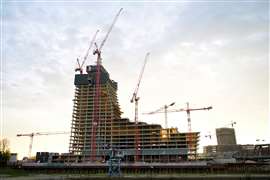 View of the construction site of the Elbtower building, owned by Rene Benko’s Signa and a Commerzbank subsidiary, in Hamburg, Germany. (Image: Reuters)
Germany’s construction spending is forecast to fall in 2024 for the first time since 2009 and the fallout from the financial crisis, according to a study by the DIW economic institute and seen by Reuters.
A separate study by Ifo economic institute showed that sentiment in residential construction is at an all-time low.
Rapidly rising interest rates, combined with a surge in costs has pushed some developers in Germany into insolvency.
A new DIW study predicts that construction volume will shrink by 3.5% in 2024 to €546 billion (US$597.3 billion), before recovering by 0.5% in 2025, according to Reuters.
Laura Pagenhardt, an author of the study, said, “The slump in the construction industry is taking longer than expected.”
The Ifo survey showed a fall in sentiment in residential construction to -58.6 points in December, down from -54.4 in November. It was the lowest level since Ifo began tracking the index.
Tim-Oliver Mueller, head of the German Construction Industry Federation said, “Berlin, we have a problem. We are not talking about abstract things, but about affordable housing, which is urgently needed.”