Link-Belt crawler crane on Washington construction site

17 March 2022
Virginia, USA-based Hardesty Concrete Construction Sterling purchased a Link-Belt 51 tonne capacity TCC-500 telescopic crawler crane to aid construction of a six storey, 25 unit residential building in Washington, DC.
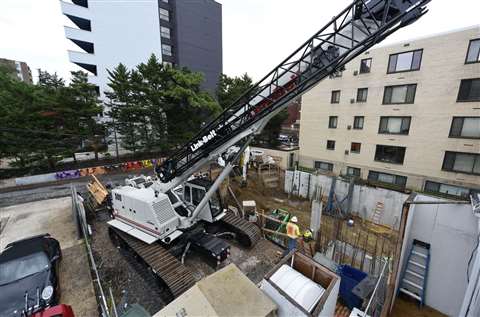 The model was chosen due to its small footprint (Photo: Link-Belt)
The model was chosen due to its small footprint and reach to pour concrete, lift materials and erect structural steel.
“We needed something that had a footprint under 5.8 metres and could reach out 36.5 metres. We used the fly on this crane for steel erection of six floors above grade. It has been a lifesaver for us,” said Chris Huntt, hoisting and logistics manager for Hardesty Concrete Construction Inc.
A Link-Belt TCC-500 requires no additional space to set outriggers. The track width of a fully extended TCC-500 is 4.63 metres.
“Space is extremely tight on this job, we have less than 180 degrees to swing because of existing structures and parked cars next door,” said operator Mario Gonzalez Jr.
The lot size of the project is 13.4 metres wide and 29.8 metre deep. The TCC-500 is positioned at the rear of the site, accessible by alley. From there the crane is able to reach the front of the jobsite with 33.5 metres of boom and pour concrete as well as lift rebar, steel, lumber and plywood.