Liugong opens Brazilian factory

07 April 2015
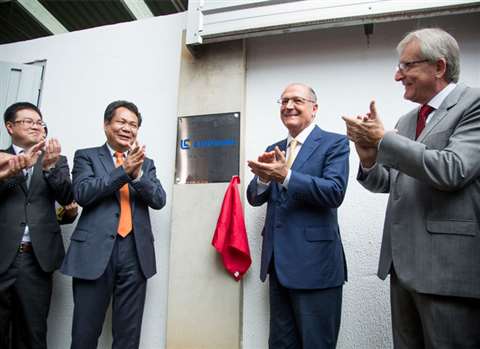
Liugong has opened a construction equipment factory in Mogi Guaçu, which is in Brazil’s São Paulo state. The facility is some 180 km from the city of São Paulo.
Liugong expects to build 1,500 machines per year at the new facility, with products including wheeled loaders and excavators. The company says it will be using globally recognised components in its equipment, including Cummins engines and ZF transmission parts.
Bruno Barsanti, vice president of Liugong Latin America said, "Liugong is reinforcing a long-term relationship with Brazil. We have a success story in the country with our machines. This investment is the natural consequence of our business’s evolution and the belief that the infrastructure and construction markets have good potential for growth in the coming years."
He added that the company expects to hire around 80% of the factory’s staff locally. "Our company invests heavily in new products and technologies in China, and these advances are used worldwide in our operations in Poland, India, Argentina and now Brazil. We are committed to transferring our values to the communities selected to build our facilities, bringing social and economic growth and knowledge," said Mr Barsanti.
The Brazilian factory is Liugong’s fourth outside its home market of China. The company says it has had a presence in Brazil since 2007.