Reset or rebound: Looking forward in 2026

15 January 2026
In the January 2026 issue of American Cranes & Transport, Mike Chalmers spoke to industry experts across finance, transportation and construction economics about trends, pressures and decisions that will likely define 2026
As 2026 takes shape, crane, rigging and specialized transportation firms are navigating a landscape shaped by economic shifts, policy uncertainty and historic levels of infrastructure and energy investment. Demand remains strong across most sectors, yet questions around tariffs, financing, insurance and supply-chain stability continue to influence how companies plan for the year ahead.
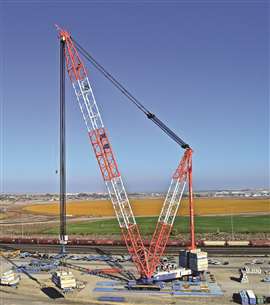 From data centers to power projects, crane activity remains strong heading into 2026 despite financial pressures and tightening insurance markets reshaping how companies plan.
At the same time, emerging opportunities in data centers, renewable energy, industrial expansion and global construction markets are reshaping long-term strategy. To better understand what the next 12 to 18 months may hold, SC&RA spoke with industry experts across finance, transportation and construction economics, each offering perspective on the trends, pressures and decisions that will define the 2026 market horizon.
“From our view, everybody still has a high demand for equipment, despite some industry-wide challenges,” said Harry Fry, President, Harry Fry & Associates. “Obviously, the tariff uncertainty is causing issues with that, but capital’s lining up. People are getting ready. Once they can get some certainty onto the tariff situation, I think you’ll see people jumping right in.”
Discipline and realism
With limited used equipment on the market, Fry added that new purchases will likely ripple outward. “People that are buying new will start passing stuff on to the user, because there really isn’t a lot of good used equipment going out into the market right now.” As a financial signal, he pointed to something less tangible but increasingly reliable. “People typically aren’t afraid to spend once they can get their hands on some equipment.”
As for how companies should think about structure and cash flow when equipment pricing, insurance and parts remain unstable, Fry pointed to discipline and realism. “On the equipment cost side, that alone is unpredictable. You have to figure on at least the 20 percent mark, maybe 15 on the low side. There’s talk about exemptions, but they’ve been talking about that since the tariffs came out.”
He noted that most firms with stable backlogs were already hedging. “The companies that have jobs lined up are hedging a little bit in how they’re pricing jobs. That helps, because when we go forecasting on the debt service, we use some of that information to determine how they’re going to pay for this equipment.”
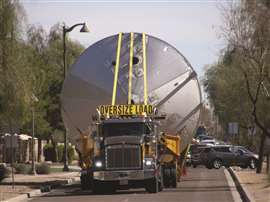 Trucking markets remain uneven heading into 2026, with freight recession conditions and escalating operating costs challenging carriers across manufacturing, construction and retail freight.
Insurance, said Fry, remained one of the most unpredictable forces in the business. “It’s tough. The big guys can handle it. The smaller companies struggle. How do you really price that? The price of new equipment and the price of insurance is requiring a lot of people to make do with what they have for as long as they can.”
Fry pointed to three tiers of financial resilience. “The big companies have a plan. Mid-size companies have a good source of customers – they know what they can do on pricing and where their insurance will land. The small companies … I don’t see how they can really plan for it, because they don’t know what’s going to happen for them.”
Continued pressure
Ken Simonson, chief economist at Associated General Contractors of America (AGC), offered a clear view of the market dynamics most likely to influence crane and specialized transport activity in 2026 – pointing to a sharp divide between the sectors poised for expansion and those likely to contract.
 Harry Fry, president, Harry Fry & Associates
“By far, the strongest markets are likely to be data centers and power projects,” he said. “The latter may include solar, geothermal, revived or new ‘modular’ nuclear plants, transmission, utility-scale battery storage and generators (some located at data centers), and natural gas liquefaction trains and export facilities.”
Simonson also addressed workforce trends and how they could affect project planning. “With lackluster demand for many types of projects, contractors are not likely to have as much trouble filling positions as in recent years — if they are hiring at all,” he said. “However, foreign-born workers account for about one-third of construction craft workers. The cutoff of immigration and stepped-up enforcement are likely to make filling some positions more difficult and could cause disruption to active job sites.”
On the trucking side, Bob Costello, Chief Economist and Senior Vice President for the American Trucking Associations, explained that he looks at freight dynamics through a lens of three buckets.
“Manufacturing, construction and retail,” he confirmed. “Manufacturing is the largest of those buckets. I’m not overly optimistic about an improvement in demand for truck freight generally. There are a few pockets that have been good, like construction of data centers and infrastructure spending. But outside of those, we remain in a freight recession.”
 Ken Simonson, chief economist, Associated General Contractors of America
Costello added that while he did not expect demand to rebound meaningfully, capacity reductions could make conditions feel less strained for carriers. “We are likely to continue to see a drop in industry supply so that could make freight levels not seem quite as bad in 2026 – essentially, fewer trucks chasing the same or less freight,” he said.
Turning to costs, Costello maintained, “Besides weak demand, the other big problem is costs. If we were talking about the macro-economy seeing a decrease in GDP while inflation remained high, we’d call that stagflation. Well, that is exactly where the trucking industry has been over the last few years.”
He pointed to data from ATRI to underscore the pressure carriers face. “Excluding fuel outlays, industry costs were forty percent higher in 2024 than in 2019. Freight rates only increased eleven percent over that same period. That’s a killer.” He added that federal actions related to ELD enforcement, non-domiciled CDL holders and crackdowns on Mexican drivers hauling domestic freight would further tighten supply.
Despite the uneven market, Costello indicated that specialized carriers are well-positioned. “Being a niche fleet or specializing in specific type of hard-to-move freight is always better than a generic fleet with more competition,” he said.
Careful planning
Looking ahead, Fry noted that companies that weather volatility share one trait: reserves. “Most companies that can weather a storm – construction, transport or any business – have themselves set up with proper capital reserves, whether in hard asset or cash. It’s not necessarily money sitting around, but some of the bigger companies only have a small percentage of their fleet financed. Their bank is some of the equipment sitting in their yard.”
He observed a shift in financial habits as the market moved from low-interest boom times into a more constrained environment. “During the low-interest-rate years, we saw a lot of deals on shorter terms because companies didn’t see any end to their revenue streams. Now that things have tightened a bit – tariffs, delays on equipment and supplies – you see people planning more carefully.”
 Bob Costello, chief economist, American Trucking Associations
He cautioned companies against assuming strong cycles will last. “People say, ‘We’re going to keep making all this money’ because all the data centers are up and everything is really busy – which it is. There’s always a tomorrow. There’s always going to be a time where there’s a dip.”
The firms that fare best recognize how quickly conditions can turn. “We hear it all the time – ‘It’ll never happen. We’ve got these contracts; we’ve got this or that.’ We all know that on any given day, things can change. Cycles define the industry, and everything runs on trend. It’s smart to understand that a trend won’t last forever – you have to keep thinking ahead.”