Construction growth for South East Asia
30 August 2018
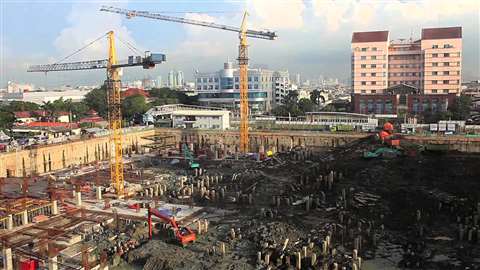
The construction output in the member states of the Association of South East Asian Nations (ASEAN) will expand by an average of over 6% yearly during 2018–2022, according to recent White Paper by data and analytics company GlobalData.
Danny Richards, GlobalData’s lead economist for construction industry said, “The South East Asia region continues to develop at a rapid pace, with economic growth projected to reach an annual average rate of 5.1% during 2018–2022, the fastest among all global regions.
”Much of this growth is being driven by investment in new infrastructure, while increasing domestic demand is driving the expansion in construction of buildings across the residential and non-residential sectors.
“Although there are disparities in the pace of growth in construction output among the ASEAN member states, the region’s construction industry as a whole will grow by 6.1% on an annual average basis in the next five years. This is marginally behind the projected growth of 6.5% in the thriving emerging markets in the Middle East and Africa, but the ASEAN region presents investors and developers with a lower level of risk of projects being put on hold or cancelled.”
According to figures from GlobalData, the combined value of mega-projects across ASEAN stands at US$2.9 trillion.
The report was prepared for Intermat Asean, which takes place in Bangkok, Thailand, on 6-8 September 2018.