Mather+Stuart plans spending spree
02 November 2018
Mather+Stuart Power Solutions has announced it will invest £8 million (€9 million) on new equipment before the end of 2018.
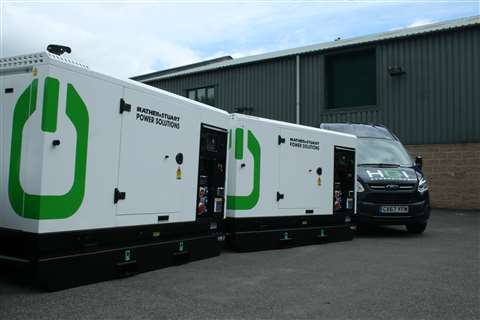
The company’s strategic investment programme, which aims to capitalise on new growth opportunities, follows a string of recent service centre openings across the UK.
Phase one of the company’s spending spree saw a £2 million (€2.2 million) order placed with Harrington Generators International in the summer. The deal included over 180 pieces of equipment, including a range of new generators.
The company, which is division of A-Plant, said the models would be installed with synchronisation panels, offering customers more options to link generators together, providing significant fuel savings.
Gary Orton, director of Mather+Stuart, said the investment reaffirmed the company’s commitment to offering customers the very best equipment available in the industry.
He said, “Following our acquisition by A-Plant in 2016 we have experienced a period of rapid growth, opening nine new service centres and tripling the size of our fleet from 650 generators in January 2016 to over 2,000 by August 2018.
“To support our expansion plans, keep up with customer demand and ensure we remain one of the UK’s market leaders it is vital that we continually update our fleet.
“With further multi-million pound investments already in the pipline we can guarantee that we offer the most innovative, reliable, safe, environmentally friendly equipment in the industry.”