Digital Displacement project
14 August 2018
A joint venture led by Scottish-based technology firm Artemis Intelligent Power has launched a £22 million (€24.68 million) project to develop technology for low-carbon off-road vehicles.
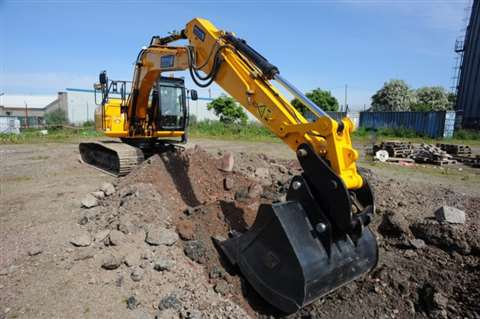
Working in collaboration with Danish supplier of hydraulic equipment Danfoss and Scottish firm Robbie Fluid Engineering, Artemis is aiming to reduce the energy used by off-road machinery by at least half.
The 42-month project has secured £11 million (€12.34 million) from the Advanced Propulsion Centre UK to help develop a new generation of Digital Displacement hydraulic pumps and motors.
Niall Caldwell, managing director of Artemis, said, “With Digital Displacement we are leading hydraulic power into the digital age by embedding digital control into the very heart of the machine.”
After testing a standard excavator, the company said it found that most of the energy produced by the engine was wasted as heat inside the system.
Caldwell said, “Rather than focusing on the engine itself, we realised that the most cost-effective way to reduce the fuel consumption and emissions of these machines is to eliminate this waste, by improving the efficiency of the hydraulic system.”
Even with modest adoption rates of the Digital Displacement technology, Artemis has forecast that CO2 emissions could be reduced by 10 million tonnes over the first ten years of commercial operation, saying that smaller engines would be needed.
Further to this, Caldwell said, “It’s not enough to invent these technologies in the UK – we also need to manufacture here and export round the world. This announcement paves the way for the UK to take the lead in a low-carbon technology with global potential.”