Jeddah Tower: Construction officially restarts on world’s tallest skyscraper

04 October 2024
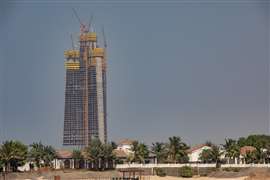 Construction on the 1km-tall Jeddah Tower has resumed ahead of planned completion in 2028 (Image: Adobe Stock)
Construction work has officially restarted on the long-paused Jeddah Tower, which at one kilometre tall, is set to become the world’s tallest skyscraper.
The developer behind the scheme, Jeddah Economic Company, has announced that the project is now scheduled to complete in 2028, a decade after work on the tower stopped amid an anti-corruption probe led by Crown Prince Mohammed bin Salman.
The future of the partially built structure, 63 of whose 157 storeys are already complete, had been in doubt ever since works ground to a halt in 2018.
Contractor Saudi Binladen Group has been awarded a new contract worth 7.2 billion riyal (US$1.9 billion) for construction work on the tower. Part of that sum – around 1.1 billion riyal (US$2909 million) has already been paid for completed work.
Prince Alwaleed bin Talal, chairman of the Kingdom Holding Company, which is one of the main backers of the project, posted on social media network on X a message that simply stated “We’re back. The message was accompanied by a digital video of how the completed tower is expected to look.
The Jeddah Tower, which was also previously known as the Kingdom Tower, was originally due for completion in 2020, after work started in 2013. It will be the centrepiece of the wider $20 billion, 5.3 million sq m Jeddah Economic City development.