Kennards acquires in Western Australia

01 April 2022
Kennards Hire in Australia has acquired Redi Hire Solutions, a general rentals business in Geraldton, Western Australia. The purchase price was not disclosed.
Redi Hire operates from a 6,000 m2 site in Geraldton, and will bring Kennards network in the west coast region to 22. The new depot is north of Kennards Hire’s Joondalup branch and will plug a gap in the mid-west between Perth and the Pilbara.
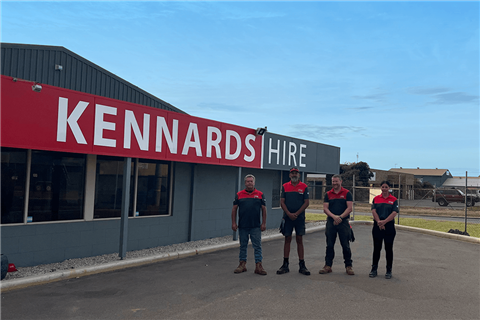 From left: Mark Stewart, Clinton Reardon, Dylan Moebius and Meagan George. (Photo: Kennards Hire.)
Redi Hire was built by husband-and-wife team, Leslie and Fiona Panting, who are now retiring from the business. Fiona’s brothers - Mark and David Stewart - have joined the Kennards Hire team alongside all other employees at Geraldton.
Geraldton’s new Branch Manager Dylan Moebius, said; “We are delighted to have the original business team and family members stay on with us. They bring with them local knowledge and experience and will be great assets to the business.
“We deeply value family and community at Kennards Hire and to be able to share these values right away is a great way to start here for us in Geraldton”.
Moebius started his career with Kennards at its Balcatta branch as a casual Service Person Driver at the age of 19, and before taking on the Geraldton role was Branch Manager at Kennards’ Port Hedland location.
“Having recently celebrated 21 years since we opened our first branch in WA, we continue to see great opportunities for growth and the Redi Hire Solutions acquisition increases our footprint in a growing market”, added Moebius.