New head for Soletanche Freyssinet
01 April 2015
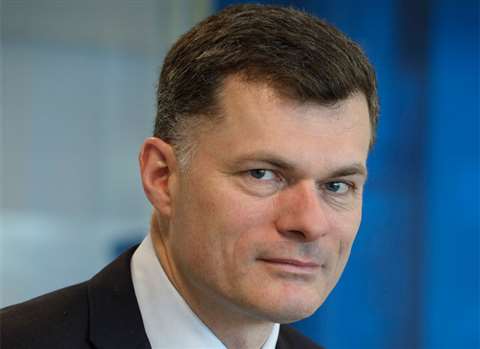
Benoît de Ruffray has been appointed CEO of Soletanche Freyssinet, a subsidiary of Vinci Construction.
A graduate of the French engineering schools École Polytechnique and École Nationale des Ponts & Chaussées, de Ruffray (48) holds a master’s degree from Imperial College London, UK.
He began his career in 1990 within the Bouygues Group, first at Bouygues Travaux Publics, where he held a variety of positions and then headed major projects, including the Beirut seafront, until 2003. In 2001 he was appointed to head Bouygues Travaux Publics’ Latin American area.
Between 2003 and 2007, he was CEO of Dragages Hong Kong, a subsidiary of Bouygues Construction, and oversaw the business activity of Bouygues Travaux Publics in the Asia Pacific area, and of Bouygues Bâtiment International in Northern Asia. In 2007, he was appointed deputy CEO of Bouygues Bâtiment International.
Soletanche Freyssinet, with soil, structural and nuclear business lines, generated €2.7 billion in revenue in 2014 (up 4.9% from the previous year). It is involved in the design, construction, maintenance and repair of a wide variety of structures – bridges, port facilities, transport infrastructure, high-rise buildings, shopping centres, nuclear sites, dams, stadiums, mines and tunnels.
Five companies make up the Soletanche Freyssinet Group – Soletanche Bachy, foundations and ground technologies; Menard, ground reinforcement and improvement; Terre Armée, retaining structures and prefabricated arches; Freyssinet, integrated technical solutions in construction and structural repairs; and Nuvia, specialised expertise for the nuclear industry.