Smiths invests in Doosan models
10 October 2017
UK rental company Smiths (Gloucester) Limited has added to its fleet with a 10-unit order for Doosan mini excavators.
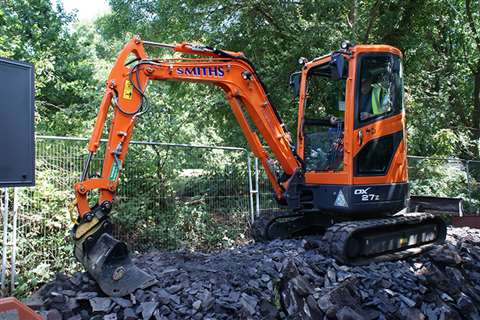
The deal comprises five of Doosan’s DX27Z models and five DX62R-3’s, and adds to the company’s offerings which include self-drive hire or with an experienced operator.
The Doosan DX27Z zero tail swing model is part of the Doosan range of mini excavators covering the weight range from 1 to 8 tonne. It offers optimum stability, ample space for the operator and easy serviceability.
Meanwhile, the DX62R-3 6 tonne reduced tail swing model incorporates advances in many areas to maximise performance, versatility, operator comfort, durability, ease of maintenance and serviceability, said Doosan.
Gerry Fehily, divisional plant manager at Smiths, said, “We have run Doosan mini excavators in the past and know they are cracking machines that are ideal for the hire business.
“We have been using 5.5 tonne machines recently, but we have returned to the 6 tonne DX62R-3 excavator as it provides better power and strength for heavier tasks such as lifting pallets of materials and kerb stones around sites.”
Smiths is a family company, owned and run by the Smith family since the business began in 1982.
As well as plant hire, a wide range of other services are available from Smiths, including skip hire, construction, demolition, waste management, transport, drain services, asbestos removal and laser levelling.