The Crane gets first new Terex CC 6800 in Thailand
23 June 2016
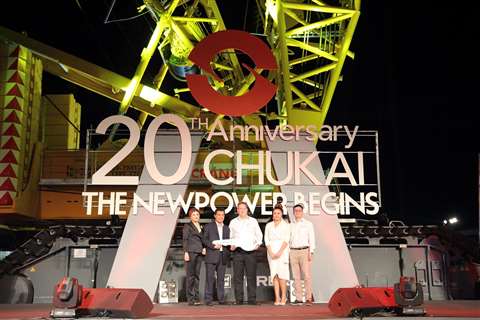
A Terex CC 6800 crawler crane has been delivered to new owner The Crane – a subsidiary of Chu Kai. It is the first new crane of its kind to be commissioned in Thailand, Terex said.
The new unit will help the Thailand-based heavy lift company to grow its position in Thailand and other parts of Southeast Asia as the main provider of the area’s largest cranes, the company said.
Delivery of the CC 6800 was commemorated with a handover presentation attended by more than 500 people from Chu Kai, Terex Cranes and guests.
Janejira Praerangsi, The Crane managing director, said, “Having the right equipment for the needs of customers is a priority for our company. “We are anticipating growth in our markets over the next few years, and we wanted to make sure we are able to offer the best options among our competitors. The CC 6800 provides versatility for all of the markets we work in.”
The Crane’s new lattice boom crawler crane lifts 1,250 tonnes and its maximum load moment rating is 13,952 tonne-metres. It is simple to assemble which means a short setup time, the company said. Features include main boom variable offset for SW and SWSL configurations. Both Quadro drive and hydraulically-assisted boom section pinning are standard features.
The company also has an older CC 6800 in its fleet.