Podcast: Impact of Covid-19 on global economies
27 April 2020
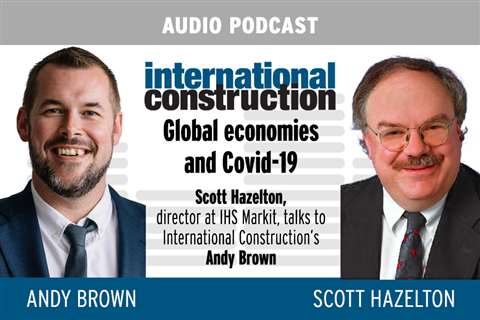
The global economy is in recession due to the effects of the Covid-19 pandemic with the countries worst affected by the virus to suffer, “steep and deep recessions” according to Scott Hazelton, director at information and analytics company IHS Markit.
Speaking to Andy Brown, editor of International Construction, Hazelton said that the US economy would be one of the worst hit in the world, but that at the moment it is not forecast to be as bad as in 2008, when the global financial crisis hit.
It is expected that there will be recessions across Latin America, with Argentina struggling economically before the virus struck and Venezuela still in severe social and economic difficulties.
Hazelton also made the point that, with oil prices crashing, many countries would not have the money needed to invest in large-scale infrastructure projects as they might have previously planned.
“Some countries fund a lot of infrastructure though oil revenues and they will have a real challenge… Nigeria, for example, doesn’t have strong financial reserves so they will have to cut back on infrastructure.”
Regarding the future, Hazelton said that the construction industry was better placed than many other industries in terms of “ongoing operations, with infrastructure in many countries considered essential.”
However, he cautioned that the sectors of commercial and industrial construction would likely suffer from a pronounced fall in demand that could take years to recover from.